SUMMARY
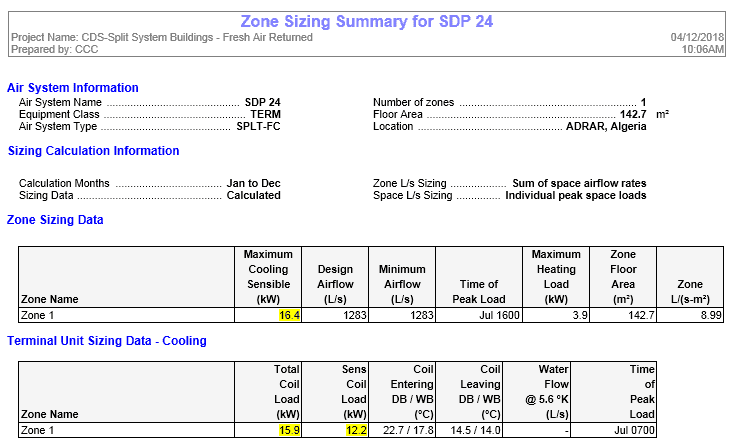
The discussion clarifies the differences between zone sizing data and terminal unit sizing data in HAP (Hourly Analysis Program). It establishes that the terminal unit, which receives pre-treated primary air, has distinct heating and cooling requirements compared to the zone it serves. Specifically, the maximum cooling sensible load for the zone can exceed the sensible coil load of the terminal unit, as indicated in the system design report. This discrepancy arises due to the terminal unit's lower coil entering temperature relative to the room temperature.
PREREQUISITES
- Understanding of HAP (Hourly Analysis Program) software
- Knowledge of HVAC system design principles
- Familiarity with terminal unit operation and characteristics
- Basic concepts of zone and load calculations in HVAC
NEXT STEPS
- Research HAP software functionalities for zone and terminal unit sizing
- Study HVAC load calculation methods and their applications
- Explore the impact of coil entering temperature on terminal unit performance
- Learn about pre-treated primary air systems in HVAC design
USEFUL FOR
HVAC engineers, system designers, and professionals involved in load calculations and terminal unit specifications will benefit from this discussion.