SUMMARY
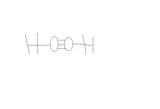
The discussion centers on the molecular structure and dipole interactions of hydrogen peroxide (H2O2). It is established that H2O2 does not exhibit dipole-dipole forces due to the cancellation of its component dipole moments, resulting in no net dipole moment. The Lewis structure of H2O2 reflects this cancellation, as the antiparallel dipole moments of the hydroxyl groups negate each other. The analysis emphasizes the importance of considering formal charge and the typical valence of oxygen atoms in understanding molecular geometry.
PREREQUISITES
- Understanding of molecular polarity and dipole moments
- Familiarity with Lewis dot structures
- Knowledge of formal charge calculations
- Basic principles of vector addition in chemistry
NEXT STEPS
- Study the molecular geometry of hydrogen peroxide (H2O2) using VSEPR theory
- Learn about the properties and implications of dipole-dipole interactions in polar molecules
- Explore the concept of formal charge in greater detail, particularly for oxygen-containing compounds
- Investigate the differences between polar and nonpolar molecules, using examples like CO2 and H2O2
USEFUL FOR
Chemistry students, educators, and professionals interested in molecular structure, polarity, and the behavior of chemical compounds in various states.