Do Static Variables Retain Their Values Across Function Calls in Algorithms?

Join the discussion
Ask a follow-up here, or get your own question answered by working scientists, mathematicians and engineers — people, not an autocomplete.
Real named experts · corrections over time · the nuance an AI answer skips
1 reply · 2K views
evinda
Gold Member
MHB
Messages
3,741
Reaction score
0
Hello! (Smirk)

Suppose that we have an algorithm of the form:

Code:
Algorithm(NODE *P){
  static int s=0;
  Algorithm(P->RC);
  ......
  Algorithm(P->LC);
  ......
  s++;
}

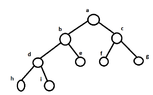
where P is the root of a binary tree, for example this one:

View attachment 3616

When we call the function [m]Algorithm(a)[/m], [m]s[/m] will get the value $0$.
After that, we call the function Algorithm(b). Does [m] s [/m] get again the value $0$, or not, because of the fact that it is static? (Thinking)
 

Attachments
  • extree.png
    extree.png
    2.8 KB · Views: 115
Physics news on Phys.org
This is what is referred to as "variable lifetime" or "storage duration". An "auto" variable (the default, actually "auto" is an implicit keyword in C, and is/was in C++) is defined to exist only in the scope in which it is declared. As soon as the program execution leaves that scope, the variable ceases to exist (and a new variable will be "created" as the execution potentially reenters that scope). A "static" variable is defined to be created at the start of the program, and last until the program terminates. As such, there is only one such variable, and so the variable will persist across multiple function calls. So, yes, whatever the value of "s" was after the function returns, it will be after the function is called again.

("static" also has some semantics related to visibility - technically, in terms of storage duration, "static" is equivalent to "extern" and possibly other thread-local keywords, the point is that variables marked "static" are not "auto". this is further complicated by the existence of the "register" keyword, which represents the same storage duration as "auto" but with again a slightly different meaning; you can't take pointers to register variables)