What does the standby symbol on power switches really mean?

Click For Summary
SUMMARY

The standby symbol, represented by a line partially within a broken circle, indicates a low power state rather than a complete disconnection from the power supply. This symbol is often found on toggle switches and pushbuttons that transition devices into standby mode. Users have expressed confusion over its functionality, as some devices, like Samsung TVs, utilize the symbol for both on and standby states. The inconsistency in implementation by manufacturers leads to misunderstandings about the symbol's intended meaning.

PREREQUISITES
  • Understanding of power symbols and their meanings
  • Familiarity with device power management concepts
  • Knowledge of International Electrotechnical Commission (IEC) standards
  • Basic electronics terminology related to power states
NEXT STEPS
  • Research the International Electrotechnical Commission (IEC) standards for power symbols
  • Explore the differences between standby and sleep modes in electronic devices
  • Investigate how various manufacturers implement power symbols in their products
  • Watch DrClaude's video on the standby symbol and IEC standards for visual context
USEFUL FOR

Electronics enthusiasts, product designers, and consumers seeking clarity on power management symbols in modern devices.

dlgoff
Science Advisor
Gold Member
Messages
4,441
Reaction score
3,264
TL;DR
I don't like this symbol and was wondering what others think.
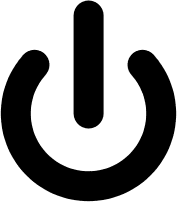
You see this symbol on power switches, but what does it really mean?
IEC5009_Symbol.png


From https://en.wikipedia.org/wiki/Power_symbol,

... the standby symbol (line partially within a broken circle), indicates a sleep mode or low power state. The switch does not fully disconnect the device from its power supply. This may appear on a toggle switch opposite a power on symbol, alone on a pushbutton that places the device into a standby state, or alone on a button that switches between on and standby.

But the switches that I've seen the symbol on doesn't cause a "sleep mode" but powers the device on and off.

... Grrr
 
Engineering news on Phys.org
I’ve always taken it to be an on/off symbol, a combination of a 0 and a 1.

Our Samsung TV uses it for on/standby, where standby is as ‘off’ as you can get without unplugging the thing. Maybe your confusion/annoyance lies with the modern melding of ‘off’ and ‘standby’. We can no longer wait that extra time for full boot-up, and must have our TVs at the beck and call of the remote control.
 
I always thought it is an old type switch seen from the top.

DPDT-CO+Toggle+Switch+20+Amps_L.jpg


Doesn't make much sense now, something like diskette used for save buttons.
 
  • Haha
  • Like
Likes   Reactions: sophiecentaur and dlgoff
 
  • Informative
Likes   Reactions: dlgoff and anorlunda
darth boozer said:
Yes boozer. That's from where I found the quote:

"... the standby symbol (line partially within a broken circle), indicates a sleep mode or low power state. The switch does not fully disconnect the device from its power supply. This may appear on a toggle switch opposite a power on symbol, alone on a pushbutton that places the device into a standby state, or alone on a button that switches between on and standby."
 
dlgoff said:
Yes boozer. That's from where I found the quote:

"... the standby symbol (line partially within a broken circle), indicates a sleep mode or low power state. The switch does not fully disconnect the device from its power supply. This may appear on a toggle switch opposite a power on symbol, alone on a pushbutton that places the device into a standby state, or alone on a button that switches between on and standby."
The key word is "Standards". If manufacturers choose to ignore the standards then they are to blame, not the symbol.
 
darth boozer said:
The key word is "Standards". If manufacturers choose to ignore the standards then they are to blame, not the symbol.
Yes. See @DrClaude's video about the symbol and the IEC at time 5:28.
 

Similar threads

  • · Replies 2 ·
Replies
2
Views
3K
Replies
5
Views
3K
Replies
2
Views
13K
  • · Replies 1 ·
Replies
1
Views
2K
  • · Replies 1 ·
Replies
1
Views
4K
  • · Replies 3 ·
Replies
3
Views
10K
  • · Replies 1 ·
Replies
1
Views
2K
  • · Replies 1 ·
Replies
1
Views
2K
  • · Replies 7 ·
Replies
7
Views
3K
  • · Replies 1 ·
Replies
1
Views
4K