Meckii
- 3
- 0
- Homework Statement
- Confused with trying to find the values in the equation although I feel like im just messing up the equation in my head.
- Relevant Equations
- Equation 3: Coefficient of viscosity = 4 x pi x r^3 × g / 3 x 6 x pi x coefficient of visc x mean velocity of ball
(Ps - P1) = (2/9) x r^2 x g ((ps - p1) / u)
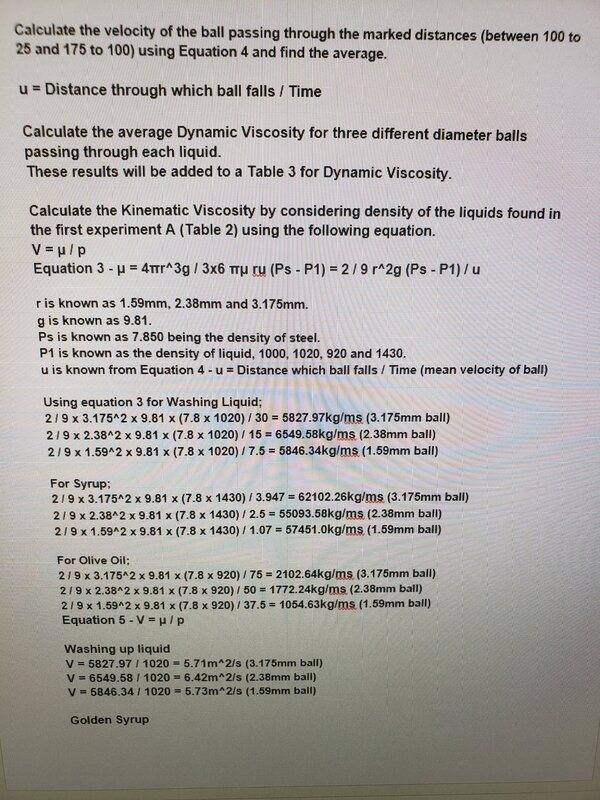
Equation 5: v = dynamic viscosity / density
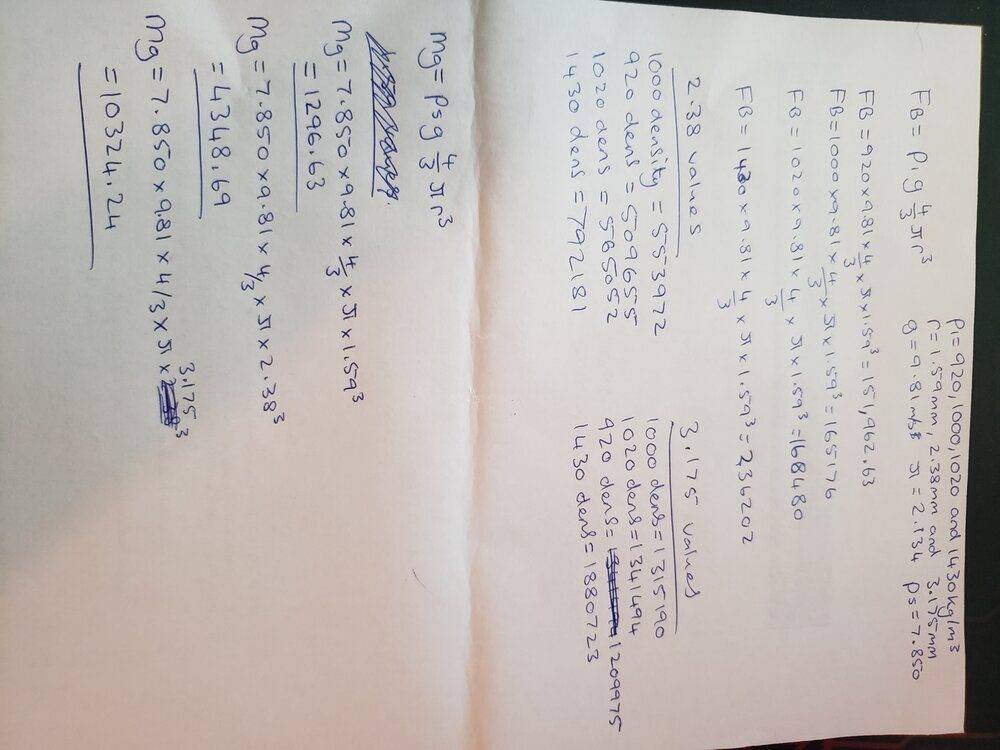
Edit: So I have written out equation 3 again and taken a picture to show my working out, the 2 things that I am confused about is how do I find the coefficient of viscosity? I know that syrup is high viscosity and water is low viscosity but I don't know the equation to get the actual value. The 2nd issue I have is when I have the coefficient of viscosity value, do I just use the 1st part of equation 3 to find the Dynamic Viscosity or do I have to somehow combine both sides of the equation? If it is the latter I do not have a clue how to work out both together. The last 2 images are what I have worked out just.
I have attempted my solution on the images attached, the first 3 images show the equations needed for the questions while the last 4 or 5 images show my working out and the way I tried attempting the questions.
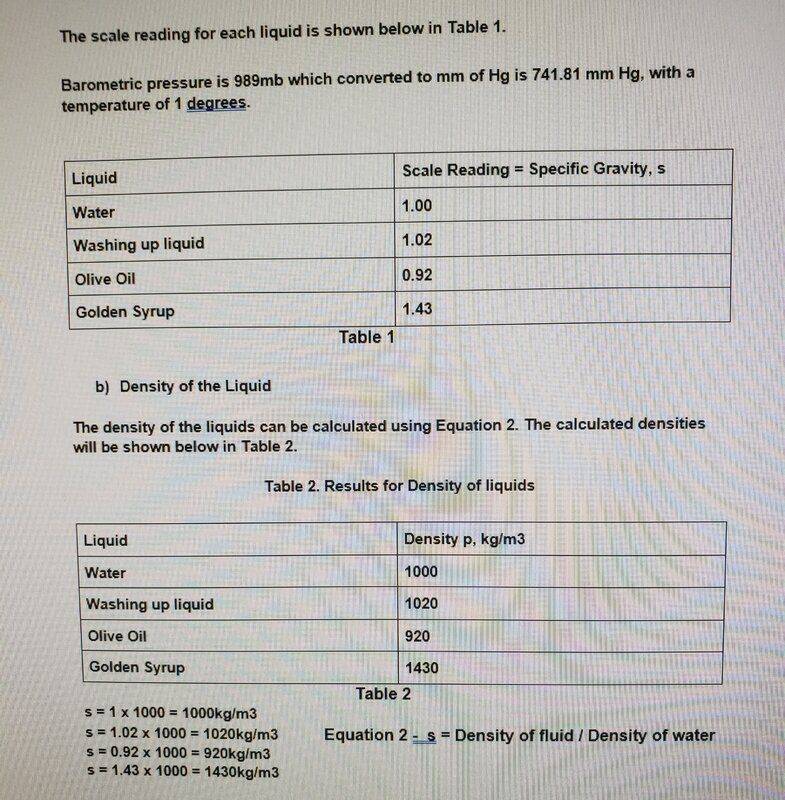
The 4th pic shows the practical work done showing the specific gravity, s and the Density, p. While the 6th page shows my attempt at the equation 3 and equation 5, the final page shows equation 5 questions at the top also. While in the 5th pic the times that the ball took to travel a certain distance is shown at the top.
All I really ask is a little bit of guidance as it has stumped me quite a bit and I am unsure how to progress with the correct values/answers.
Values achieved,
s = shown in the first table
Density, p = shown in the 2nd table
u = mean average is shown in last pic
g = 9.81
Ps = 7.850 (I am assuming this is correct, density of steel which I looked up)
P1 = given in the density table on page 4, all 4 values
r = the radius which is known as 1.59mm, 2.38mm and 3.175mm

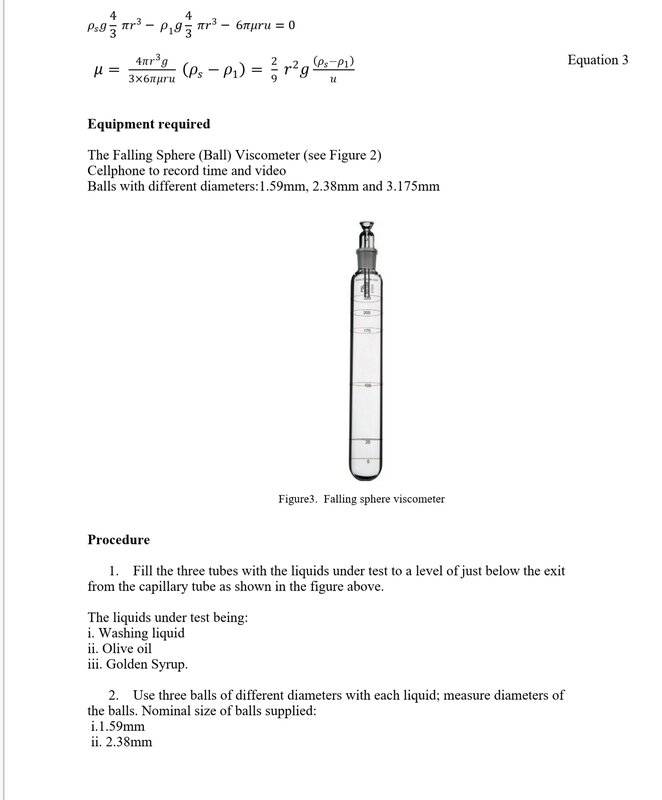



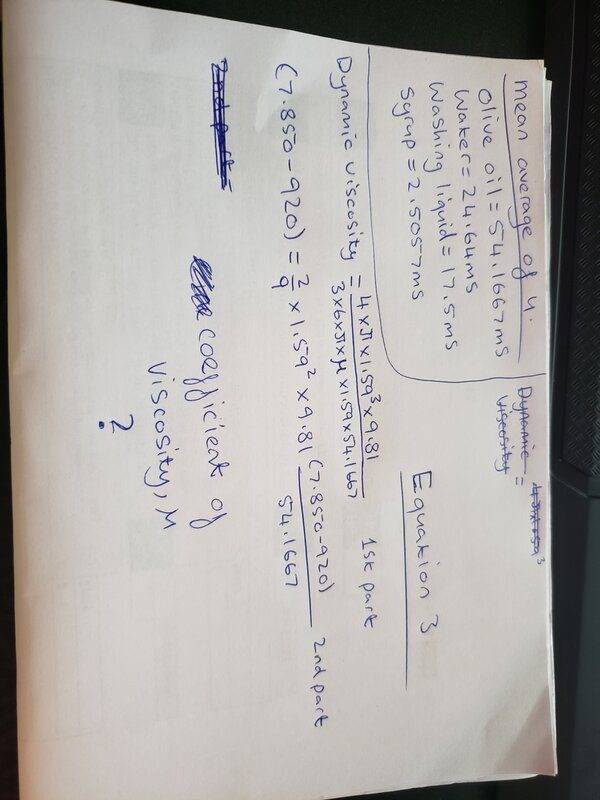
I have attempted my solution on the images attached, the first 3 images show the equations needed for the questions while the last 4 or 5 images show my working out and the way I tried attempting the questions.
The 4th pic shows the practical work done showing the specific gravity, s and the Density, p. While the 6th page shows my attempt at the equation 3 and equation 5, the final page shows equation 5 questions at the top also. While in the 5th pic the times that the ball took to travel a certain distance is shown at the top.
All I really ask is a little bit of guidance as it has stumped me quite a bit and I am unsure how to progress with the correct values/answers.
Values achieved,
s = shown in the first table
Density, p = shown in the 2nd table
u = mean average is shown in last pic
g = 9.81
Ps = 7.850 (I am assuming this is correct, density of steel which I looked up)
P1 = given in the density table on page 4, all 4 values
r = the radius which is known as 1.59mm, 2.38mm and 3.175mm
Last edited:
