Hamming code error correction implementation

  • Topic:
  • Thread starter gEOdude
  • Start date
  • Tags Tags
    Code Type
7 replies · 3K views · last reply
gEOdude
Messages
25
Reaction score
0
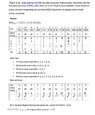
Hey guys I've attampted to do this as best I can but i need some help, becasue i know there are mistakes i have to fix.

View attachment 4321
 
Attachments
  • Worked solution table for decoding an even-parity SECDED Hamming codeword BE6 hex (1011 1110 0110 binary), with bit positions 11 to 0, data and parity labels D7 to D1 and P4 to P0, and check marks and question marks marking parity checks.
    my attempt-small.jpg
    138.2 KB · Views: 138
HELPMEHELPME said:
Hey guys I've attampted to do this as best I can but i need some help, becasue i know there are mistakes i have to fix.

Hi HELPMEHELPME! :)

Checking the parity means that there should be an even number of 1's for each parity bit.
For P4 there are 3 bits that are 1, meaning that it has incorrect parity (instead of correct parity).

As a result, there is 1 bit wrong in the section 4,5,6,7 (P3), and there is also 1 bit wrong in section 8,9,10,11 (P4).
What might you conclude from that?
 
I like Serena said:
Hi HELPMEHELPME! :)

Checking the parity means that there should be an even number of 1's for each parity bit.
For P4 there are 3 bits that are 1, meaning that it has incorrect parity (instead of correct parity).

As a result, there is 1 bit wrong in the section 4,5,6,7 (P3), and there is also 1 bit wrong in section 8,9,10,11 (P4).
What might you conclude from that?

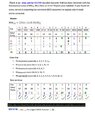
Is this better? Or is is two bits that had to be corrected? Thanks. View attachment 4323
 
Attachments
  • Worked solution table for a SECDED Hamming code decode of hexadecimal BE6 as 1011 1110 0110, with positions 11 to 0, parity bit rows P1 to P4 and P0, and check marks showing which bits are verified.
    my attempt-small.jpg
    154.9 KB · Views: 142
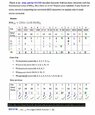
  • Worked solution table for a SECDED Hamming code decoding BE6 hex: positions 11 to 0 with data and parity bits, check-bit tables, and checkmarks, ending with the note that no bits were flipped.
    my attempt-small.correct-small.jpg
    139.1 KB · Views: 145
Last edited:
HELPMEHELPME said:
Is this better?

That fixes the mistakes in the correct/incorrect parities.
Good! :)

However, since we see that some of the parities are incorrect, we know that at least 1 bit has been flipped...
 
I like Serena said:
That fixes the mistakes in the correct/incorrect parities.
Good! :)

However, since we see that some of the parities are incorrect, we know that at least 1 bit has been flipped...

Could you give me a hint, on what i should do. Which bit to flip? I thinks its one of more of 5 or 7 or 9 or 11 or is it another one ? I'm so close i just need a little push.
 
Last edited:
HELPMEHELPME said:
Could you give me a hint, on what i should do. Which bit to flip? I thinks its one of more of 5 or 7 or 9 or 11 or is it another one ?

Indeed, one of those must be wrong.

More specifically, from P3 we can tell there is a bit wrong in the section 4,5,6,7.
And from P4 we can tell there is a bit wrong in section 8,9,10,11, which must necessarily be a different bit, since they don't overlap.
What might we conclude from that?
 
I like Serena said:
Indeed, one of those must be wrong.

More specifically, from P3 we can tell there is a bit wrong in the section 4,5,6,7.
And from P4 we can tell there is a bit wrong in section 8,9,10,11, which must necessarily be a different bit, since they don't overlap.
What might we conclude from that?

There not all wrong are they? (Thinking) is it 5? PRETTY PLEASE I NEED TO KNOW IM GOING NUTS!
 
Last edited:
HELPMEHELPME said:
There not all wrong are they? (Thinking) is it 5? PRETTY PLEASE I NEED TO KNOW IM GOING NUTS!

We can tell there are at least 2 bits wrong. We have insufficient information to tell which ones exactly.