How can I restore an antique table without completely refinishing it?

  • Thread starter Thread starter Monique
  • Start date Start date
  • Tags Tags
    Table
Click For Summary
SUMMARY

The discussion focuses on restoring an antique table made of solid wood without completely refinishing it. The recommended approach involves gently cleaning the surface, rubbing out the worst spots and rings, and applying oil to nourish the wood while preserving its original finish. Participants emphasize the importance of maintaining the integrity of the piece, suggesting that adding lacquer or paint could detract from its value as a fine furniture item. The consensus is to prioritize preservation over aggressive restoration methods.

PREREQUISITES
  • Understanding of wood care and maintenance techniques
  • Familiarity with oil finishes for wood
  • Knowledge of cleaning methods suitable for antique furniture
  • Awareness of the implications of refinishing antique pieces
NEXT STEPS
  • Research the best oil finishes for antique wood, such as tung oil or Danish oil
  • Learn proper cleaning techniques for antique furniture to avoid damage
  • Explore methods for repairing minor surface imperfections on wood
  • Investigate the long-term effects of various finishes on antique value
USEFUL FOR

Antique furniture enthusiasts, restoration professionals, and anyone interested in preserving the integrity of vintage wooden pieces.

Monique
Staff Emeritus
Science Advisor
Gold Member
Messages
4,215
Reaction score
61
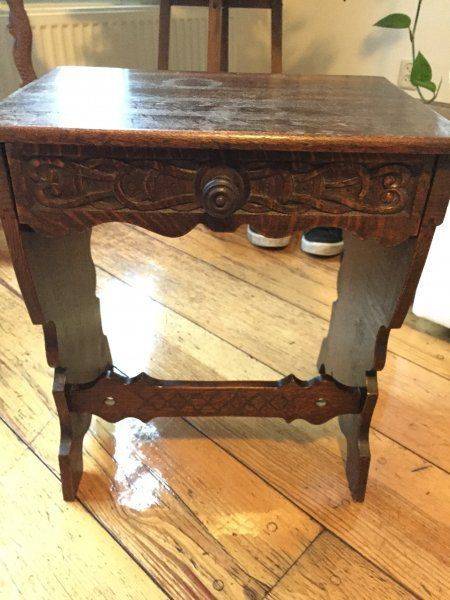
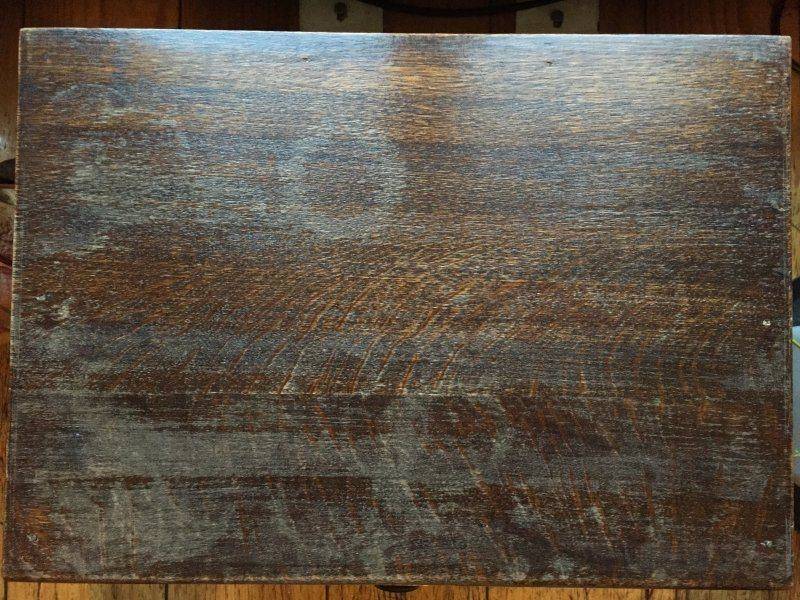
Today I bought this really cute little antique table made out of solid wood. The top however is in poor condition, the finish is worn through in many places. The rest of the table is fine, what is the best way to fix it up?

I don't want to refinish the whole thing, I like to keep the original finish. Does it make sense to just oil the top? Or would that be a disaster if I'd decide in the future to refinish it? Would it make sense to apply a layer of clear lacquer / paint instead? The last photo shows the transition of finished vs bare wood from the inside drawer.
IMG_1312.JPG
IMG_1308.JPG
IMG_1314.JPG
 

Attachments

  • IMG_1308.JPG
    IMG_1308.JPG
    111 KB · Views: 474
  • Like
Likes   Reactions: edward
Physics news on Phys.org
Looking at the weight and finish work, it is not YET fine furniture. If you add another finish of lacquer or paint (heaven forbid) then it will never be fine furniture. As solid wood construction becomes rarer, your piece may become fine, so I would gently clean it, rub out the worst of the spots and rings and oil it. Give it the best chance that it can have.
 
  • Like
Likes   Reactions: edward
Thanks for the advice, the woman I bought if from said it was in her family for a long time and with an aching heart she had to get rid of it (husband thought it didn't fit with the furniture). I'm not expecting it to be fine furniture, even though I like the construction and details. The table will be used to put a big plant on, so the top doesn't worry me that much. Your words are spot on: I'd like to give it the best chance that it can have.
 
  • Like
Likes   Reactions: edward

Similar threads

  • · Replies 11 ·
Replies
11
Views
3K
  • · Replies 42 ·
2
Replies
42
Views
7K
  • · Replies 1 ·
Replies
1
Views
4K
  • · Replies 1 ·
Replies
1
Views
3K