FocusedWolf
- 81
- 0
Ok, in my differential equation book, we're doing work on getting eigenvectors to complex eigenvalues.
anyway the author of the book only mentions Euler's Theorem as: http://rogercortesi.com/eqn/tempimagedir/eqn5095.png
and so he perfers to work with http://rogercortesi.com/eqn/tempimagedir/eqn7868.png when the roots are

So my question:
What is this called then?:

and can i use in place for
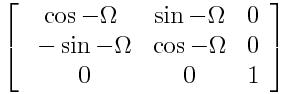 and still call it Euler's Theorem?
anyway the author of the book only mentions Euler's Theorem as: http://rogercortesi.com/eqn/tempimagedir/eqn5095.png
and so he perfers to work with http://rogercortesi.com/eqn/tempimagedir/eqn7868.png when the roots are
So my question:
What is this called then?:
and can i use in place for
Last edited by a moderator: