FishmanGeertz
- 189
- 0
For weeks after the Chernobyl disaster, many tonnes worth of molten "lava-like" nuclear fuel inside Chernobyl's shattered reactor vault eventually cooled down and formed into a hardened substance similar to ceramic.
When nuclear fuel overheats and melts, how long does it remain in it's glowing-hot molten state before it cools down and solidifies? If there is a lot of molten fuel probably at the bottom of the ruined reactor buildings of the Fukashima NPP units 1-4. How long before it cools itself down?
Is it true that this white-hot molten fuel can burn it's way through the floor of the reactor building, through the ground beneath the plant, and into the underground natural water basin causing a massive geothermal explosion that sends giant geysers of extremely radioactive steam shooting up through the general area surrounding the melted-down reactor? Isn't there a reinforced structure beneath the reactor vessel to stop this from happening?
So far we have not seen any geysers of steam shooting up from the ground at the Fukashima NPP. But this disaster is still fairly young. Apparently they are planning to flood and encase the reactor buildings with concrete as a permanent solution to this accident. Much like how the Chernobyl reactor was flooded with neutron-absorbing materials such as boron, and then a massive containment structure or "sarcophagus" was built on top of Chernobyl's reactor.
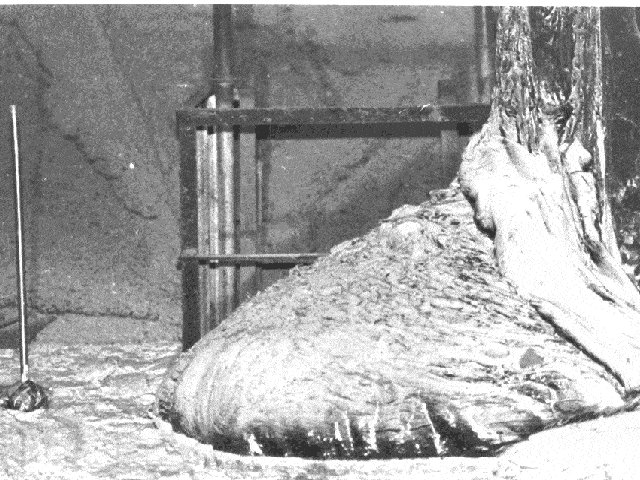
This photo from the Chernobyl NPP shows a large mass of a fuel/sand/graphite mix inside of a room in the basement located directly beneath the reactor, which solidified into a ceramic-like material. It is still immensely radioactive, and simply approaching it would mean certain death. Many years ago, I believe some Russian scientists sent a remote-controlled robot with a camera attached to it to snap the photograph seen below.
If cores of the Fukashima reactors or the spent fuel assemblies are melting, and are still burning, how long will it be until they cool and solidify? Weeks? Months? I thought the self-sustaining nuclear reaction lasts indefinitely. Which is why nuclear waste has to be constantly cooled 24/7 in giant refrigerated pools of water pretty much forever.
When nuclear fuel overheats and melts, how long does it remain in it's glowing-hot molten state before it cools down and solidifies? If there is a lot of molten fuel probably at the bottom of the ruined reactor buildings of the Fukashima NPP units 1-4. How long before it cools itself down?
Is it true that this white-hot molten fuel can burn it's way through the floor of the reactor building, through the ground beneath the plant, and into the underground natural water basin causing a massive geothermal explosion that sends giant geysers of extremely radioactive steam shooting up through the general area surrounding the melted-down reactor? Isn't there a reinforced structure beneath the reactor vessel to stop this from happening?
So far we have not seen any geysers of steam shooting up from the ground at the Fukashima NPP. But this disaster is still fairly young. Apparently they are planning to flood and encase the reactor buildings with concrete as a permanent solution to this accident. Much like how the Chernobyl reactor was flooded with neutron-absorbing materials such as boron, and then a massive containment structure or "sarcophagus" was built on top of Chernobyl's reactor.
This photo from the Chernobyl NPP shows a large mass of a fuel/sand/graphite mix inside of a room in the basement located directly beneath the reactor, which solidified into a ceramic-like material. It is still immensely radioactive, and simply approaching it would mean certain death. Many years ago, I believe some Russian scientists sent a remote-controlled robot with a camera attached to it to snap the photograph seen below.
If cores of the Fukashima reactors or the spent fuel assemblies are melting, and are still burning, how long will it be until they cool and solidify? Weeks? Months? I thought the self-sustaining nuclear reaction lasts indefinitely. Which is why nuclear waste has to be constantly cooled 24/7 in giant refrigerated pools of water pretty much forever.