Discussion Overview
The discussion revolves around the identification of a jawbone found at a construction site, with participants exploring whether it could be human. The conversation includes inquiries about the bone's characteristics, its potential age, and the circumstances surrounding its discovery.
Discussion Character
- Exploratory
- Debate/contested
- Technical explanation
Main Points Raised
- One participant suggests that a size reference and a photo with a ruler would aid in identification.
- Another participant expresses a belief that the jawbone appears human and possibly old, asking for location details.
- A participant mentions consulting an oral surgeon who identified the jaw as human and indicates that the police have been contacted regarding the find.
- Some participants speculate about the age of the bone, with one noting that it looks old but the teeth are in good condition, prompting questions about how age is determined.
- A participant shares personal experience with old graves in their village, suggesting that the bone appears timeworn with cracks and deterioration.
- One participant recounts their experience with the police searching for the jawbone, noting that it could not be found due to construction activities.
Areas of Agreement / Disagreement
Participants express varying opinions on the identification of the jawbone, with some believing it is human while others question the evidence for its age. The discussion remains unresolved regarding the bone's identity and condition.
Contextual Notes
Participants reference personal experiences and observations that may influence their assessments, but there are no definitive conclusions about the jawbone's identity or age.
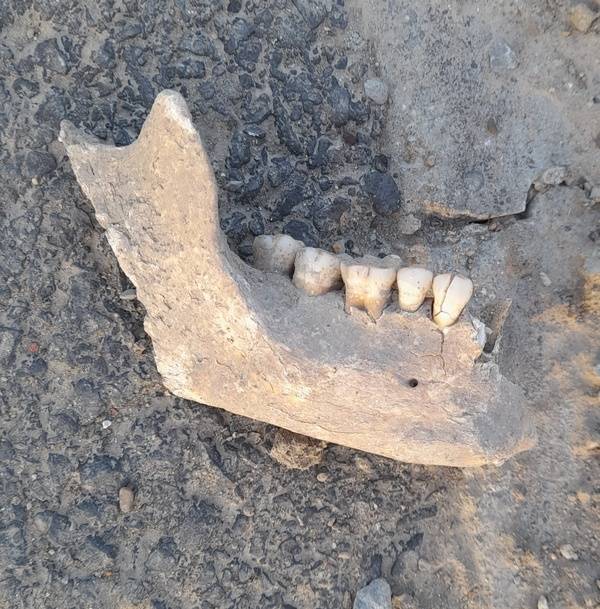
 ) we have messed with leftover bones there, so I have some basis for comparison...