Discussion Overview
The discussion revolves around the implementation of an isotropic distribution for a surface source in the MCNP (Monte Carlo N-Particle Transport Code) program. Participants explore the requirements and challenges associated with creating such a distribution, particularly in the context of surface versus cell sources.
Discussion Character
- Technical explanation, Debate/contested, Experimental/applied
Main Points Raised
- One participant inquires about how to create an isotropic distribution for a surface source in MCNP.
- Another participant suggests that isotropic is the default for cell sources, such as point sources, but confirms that the source must be a surface in this case.
- A question is raised regarding the shape of the surface and the possibility of using a degenerate volume source, with a participant noting that this approach can yield isotropic results without a geometric surface.
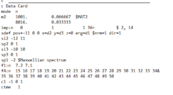
- One participant describes their attempt to create a cell source from one side of a cube, expressing confusion about the necessary configurations for neutron flux and energy distributions, and mentions encountering fatal errors.
- A later reply indicates success with a degenerate Cartesian volumetric source, confirming that the angles of particle departure appeared isotropic.
Areas of Agreement / Disagreement
Participants express differing views on the necessity of using a surface source versus a cell source, with some uncertainty regarding the configurations needed for isotropic distributions. The discussion remains unresolved regarding the best approach to achieve the desired isotropic distribution.
Contextual Notes
Limitations include unclear definitions of surface and cell sources, as well as unresolved details on the configurations for neutron flux and energy distributions that may lead to errors.