- 2,739
- 11,966
- TL;DR
- The skull of a very small dinosaur fossil was found recently.
The smallest non-embryonic dinosaur skull has been described in a pay-walled Nature article.
Science magazine news article here.

Here is a CNN story that has a video of a nice rotating 3D CT scan showing a lot of details of the skull. It looks a lot like a bird skull I found a few years ago.
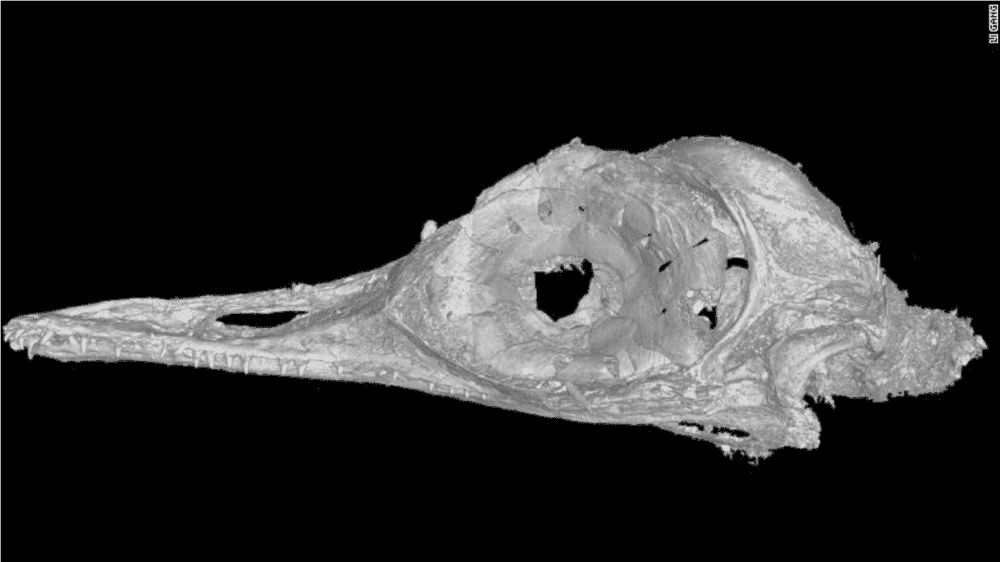
It had teeth and very bird like skull, smaller than a "thumb nail".
It had teeth (not unusual for early birds) is thought to have predated upon small insects.
This is case where a rare fossil can show things that were not known before.
Fine delicate structures are much less likely to survive long enough to get fossilized which is usually a long process. Amber, although a less frequent method of fossilization, when it occurs can preserve very delicate structures and even soft tissues in some cases (which would normally quickly rot away).
This is another case that indicates there was probably a lot of smaller organisms that we are unaware of composing a more complex ecology than we are aware of.
Science magazine news article here.
Here is a CNN story that has a video of a nice rotating 3D CT scan showing a lot of details of the skull. It looks a lot like a bird skull I found a few years ago.
It had teeth and very bird like skull, smaller than a "thumb nail".
It had teeth (not unusual for early birds) is thought to have predated upon small insects.
This is case where a rare fossil can show things that were not known before.
Fine delicate structures are much less likely to survive long enough to get fossilized which is usually a long process. Amber, although a less frequent method of fossilization, when it occurs can preserve very delicate structures and even soft tissues in some cases (which would normally quickly rot away).
This is another case that indicates there was probably a lot of smaller organisms that we are unaware of composing a more complex ecology than we are aware of.

