KISS Principle Marine Propulsion

Click For Summary
SUMMARY

The discussion centers on the application of the KISS (Keep It Simple, Stupid) principle in marine propulsion, specifically through the use of a permanent magnet motor where the propeller acts as the rotor. This design minimizes mechanical complexity by eliminating intermediate devices and hull penetrations, enhancing maneuverability when installed both forward and aft on a vessel. The conversation also touches on generating electric power on board and explores innovative concepts such as a closed-loop steam cycle for propulsion, drawing parallels to bubble jet printers and washing machine pumps.

PREREQUISITES
  • Understanding of permanent magnet motors
  • Familiarity with marine propulsion systems
  • Basic knowledge of electric power generation methods
  • Awareness of cavitation and its effects on propeller performance
NEXT STEPS
  • Research the design and functionality of permanent magnet motors in marine applications
  • Explore methods for onboard electric power generation for marine vessels
  • Investigate the principles of cavitation and its impact on propeller efficiency
  • Learn about closed-loop steam cycles and their applications in propulsion systems
USEFUL FOR

Marine engineers, boat designers, and enthusiasts interested in innovative propulsion technologies and efficient marine power systems.

anorlunda
Staff Emeritus
Science Advisor
Homework Helper
Insights Author
Messages
11,326
Reaction score
8,754
I"m a big fan of the KISS principle in engineering. I'm also a boater. I just found something I wanted to share.


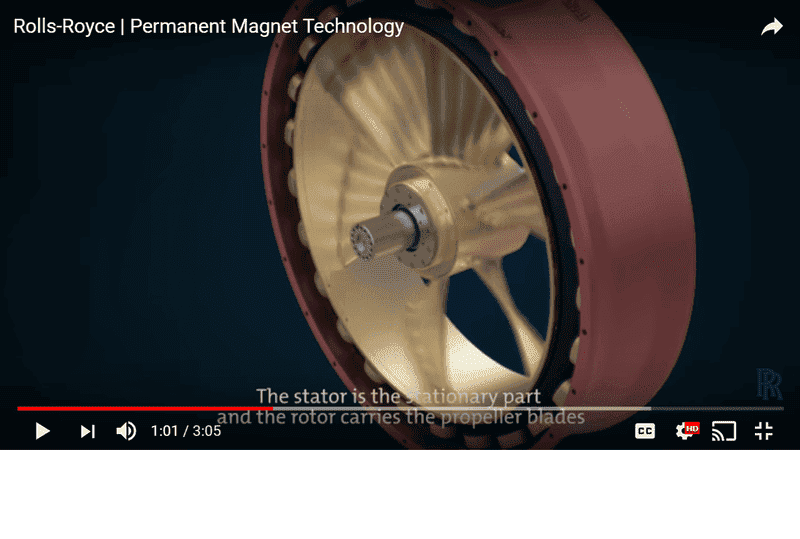
It is a permanent magnet motor in which the propeller itself is the rotor. The video hints that it works with simple reversals of polarity similar to a stepper motor.
slask.png

That eliminates nearly all of those troublesome intermediate devices and hull penetrations for mechanical power transmission, It is about as KISS as I can imagine for an electric drive.

Put one of those forward and another one aft, and you have a superbly maneuverable vessel.

How to generate the electric power on board is a separate question.
 

Attachments

  • slask.png
    slask.png
    62.8 KB · Views: 852
  • Like
Likes   Reactions: PaulK2 and DrClaude
Engineering news on Phys.org
anorlunda said:
I"m a big fan of the KISS principle in engineering. I'm also a boater. I just found something I wanted to share.How to generate the electric power on board is a separate question.

This is almost the exact concept in my mind when I made the comment in the Boeing Challenge thread, my thoughts are a very lite-weight flying platform (more complicated) where this is a perfect heat exchange opportunity. One has only to imagine a closed loop steam cycle within the blades and hub section. electric is generated at the outer ring and a resistance inside the blade tips makes high pressure steam that moves to the hub and provides torque to drive the blades, the bulk of the blade area serves to exchange heat that returns the spent steam to liquid and the cycle repeats.

ps. The mechanics would be similar to the workings of a bubble jet printer, just a much greater scale. Perhaps this might help build a mental picture of the basic workings.
 
Last edited:
The pump in our washing machine works in a similar manner. There are permanent magnets on the rotor which is submerged in the water. Means there is no need for a water tight bearing which reduces chances of a leak.
 
Video text said:
... with reduced noise and vibration levels and hardly no cavitation.
Is that a double negative there?
What has cavitation got to do with it? Maybe the blades are so poorly shaped that they have problems with cavitation.
 
Baluncore said:
Is that a double negative there?
What has cavitation got to do with it? Maybe the blades are so poorly shaped that they have problems with cavitation.

I think if you add more vanes on the prop, you can reduce the RPM for the same power. At reduced RPM you have less cavitation.
 

Similar threads

  • · Replies 5 ·
Replies
5
Views
4K