dextercioby said:
How can Robinson comment on de Groot, since Robinson's book appeared in 1972, while de Groot's in 1973? Unless it was a 2nd edition published more recently.
coquelicot said:
Sorry, you are probably right. If my memory is exact, Robinson criticizes the whole work of de Groot from 1950 (you can imagine that the book of de Groot has not pop up from nowhere).
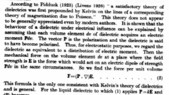
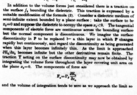
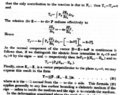
There is a chapter entitled "Statistical Foundations of Electrodynamic Theory in the book
Physics in the Making by AA. Sarlemijn and M.J. Sparnaay, 1989
The author of the chapter is L.G. Suttorp, who cites two books by S.R. de Groot, one coauthored with Suttorp
Groot, S.R. de, 1969, The Maxwell Equations (North-Holland, Amsterdam)
Groot, S.R. de and L.G. Suttorp, 1972, Foundations of Electrodynamics (North-Holland, Amsterdam)
Perhaps Robinson reviewed the draft/proof, or he received a pre-print.
Suttorp also cites three book by F.N.H. Robinson,
Robinson, F.N.H, 1971, Physics
Robinson, F.N.H, 1973, Macroscopic Electromagnetism (Pergamon Press, Oxford)
Robinson, F.N.H, 1975, Phys. Rep.
Ref:
https://staff.science.uva.nl/l.g.suttorp/articles/making89.pdf
There is this article - "V Foundations of the Macroscopic Electromagnetic Theory of Dielectric Media,"
J Van Kranendonk, JE Sipe, Progress in Optics, Volume 15, 1977, Pages 245-350
"This chapter is concerned with the derivation of the macroscopic Maxwell equations and associated constitutive relations from the underlying microscopic equations describing the dynamics of the constituent particles and the electromagnetic fields created by these particles."
Ref:
https://www.sciencedirect.com/science/article/abs/pii/S0079663808704803