Oxidation States of Molecules and Atoms and the Relationship with Charges

Click For Summary
SUMMARY

The oxidation state of carbon in ethene is -2, while in acetylene it is -1, indicating a difference in electron distribution due to the presence of pi bonds in acetylene. Despite the more negative charges on acetylene's carbon atoms, the oxidation states suggest a different perspective on electron accounting. The discussion emphasizes that oxidation numbers serve primarily as a tool for balancing chemical equations rather than reflecting measurable properties of atoms. Understanding this distinction is crucial for interpreting oxidation states and molecular charge relationships accurately.

PREREQUISITES
  • Basic understanding of oxidation states in organic chemistry
  • Familiarity with molecular structures, specifically ethene and acetylene
  • Knowledge of electron distribution and pi bonding
  • Concept of balancing chemical equations
NEXT STEPS
  • Research the concept of oxidation states in organic compounds
  • Study the electron distribution in molecules with multiple bonds
  • Learn about the role of oxidation numbers in redox reactions
  • Explore the relationship between molecular geometry and charge distribution
USEFUL FOR

Chemistry students, organic chemists, and educators seeking to deepen their understanding of oxidation states and molecular charge relationships.

Zohar
Messages
6
Reaction score
1
TL;DR
Oxidation state and charge
Hey, y'all.
I know the oxidation state of a carbon in an ethene is -2 while carbon in Acetylene is -1. As well I know acetylene has more disspating elcetrons due to pai bonds. So how come charges between the acetylene carbon are more negative than in ethene while the carbones oxidations states are more negetive on ethene.

My main question is; Is there any connection between oxidation states and molecules charges areas or they are the absulute opposite?
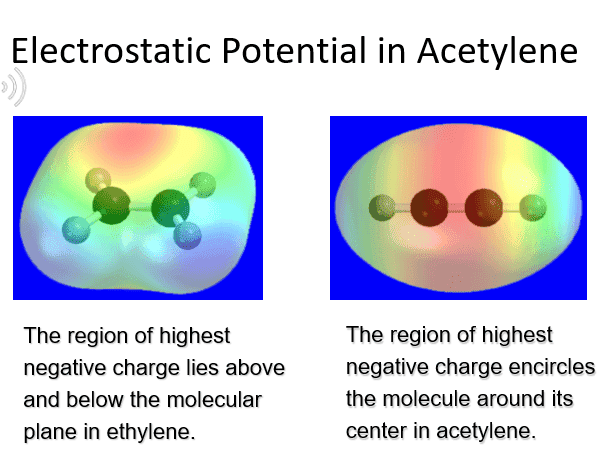
JMioWDB.png
 
Last edited by a moderator:
Chemistry news on Phys.org
Don't treat oxidation numbers too seriously, there is no measurable property of an atom that can be used to check them. They are more of an accounting device to help you balance reaction equations than a reflection of the reality.
 

Similar threads

  • · Replies 11 ·
Replies
11
Views
3K
  • · Replies 6 ·
Replies
6
Views
5K
  • · Replies 7 ·
Replies
7
Views
2K
Replies
3
Views
7K
  • · Replies 4 ·
Replies
4
Views
3K
  • · Replies 2 ·
Replies
2
Views
4K
  • · Replies 3 ·
Replies
3
Views
3K
  • · Replies 1 ·
Replies
1
Views
4K
  • · Replies 6 ·
Replies
6
Views
3K
  • · Replies 7 ·
Replies
7
Views
5K