dislect
- 163
- 0
Pressure vs. "neck" shortening of a balloon
I swear this is not a homework question
The purpose of this question is to simulate the shortening of the cervix ("neck") as a result of the increase of pressure -> volume of the female womb.
I would like to come up with a set of equations connecting between the:
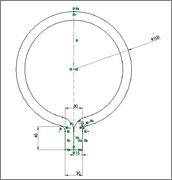
1. cervix ("neck") length - shown as 40mm and 25mm in pics
2. overall thickness - shown as 15mm in pics
3. womb radius - shown as 100mm and 105mm in pics (random approximate numbers)
4. material properties (young's modulus, yield strength, density if relevant)
We can assume the:
a. Thickness stays approximately constant
b. material properties stays constant
So in theory I would be able to input the pressure inside the balloon and receive the cervix "neck" new length (shortening) as a result of the balloon inflating and taking away from that neck's length.
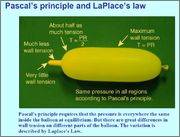
I would love someone to guide me and send me the right way. I can't really use laplace's/pascal law because the thickness is not negligible.
Thanks a lot!
Pics for demonstration

I swear this is not a homework question
The purpose of this question is to simulate the shortening of the cervix ("neck") as a result of the increase of pressure -> volume of the female womb.
I would like to come up with a set of equations connecting between the:
1. cervix ("neck") length - shown as 40mm and 25mm in pics
2. overall thickness - shown as 15mm in pics
3. womb radius - shown as 100mm and 105mm in pics (random approximate numbers)
4. material properties (young's modulus, yield strength, density if relevant)
We can assume the:
a. Thickness stays approximately constant
b. material properties stays constant
So in theory I would be able to input the pressure inside the balloon and receive the cervix "neck" new length (shortening) as a result of the balloon inflating and taking away from that neck's length.
I would love someone to guide me and send me the right way. I can't really use laplace's/pascal law because the thickness is not negligible.
Thanks a lot!
Pics for demonstration