Problem with corrosion of gypsum cement

  • Thread starter Thread starter dspdrew
  • Start date Start date
  • Tags Tags
    Corrosion
Click For Summary
SUMMARY

The forum discussion centers on the corrosion issue of Hydrostone, a gypsum cement primarily composed of over 95% Plaster of Paris, in a formicarium designed for Leaf Cutter Ants. Users identified that the corrosion is not due to pH levels but rather the inherent solubility of Plaster of Paris in water. Suggestions included using broken Hydrostone plates to mitigate the transport of dissolved gypsum and exploring alternative materials such as UltraCal 30 or unglazed ceramic tiles for better durability. The discussion emphasizes the importance of material selection in maintaining the structural integrity of the formicarium.

PREREQUISITES
  • Understanding of Hydrostone and its composition
  • Knowledge of Plaster of Paris properties
  • Familiarity with Leaf Cutter Ant habitat requirements
  • Basic principles of capillary action in hydration systems
NEXT STEPS
  • Research UltraCal 30 for potential use in formicarium construction
  • Explore the properties and applications of unglazed ceramic tiles
  • Investigate concrete mixtures suitable for thin slabs
  • Learn about the effects of humidity on gypsum-based materials
USEFUL FOR

Ant keepers, formicarium designers, material scientists, and anyone interested in optimizing habitat conditions for Leaf Cutter Ants.

dspdrew
Messages
4
Reaction score
0
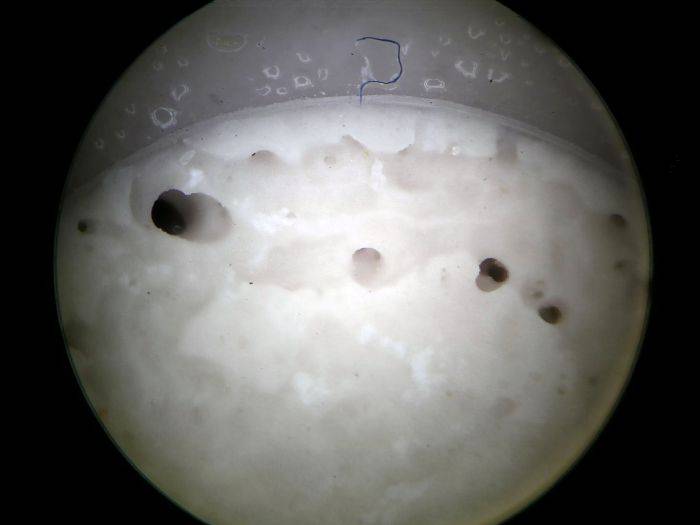
Hi, I have been working on a formicarium (terrarium for ants) design for a while now, and have been battling a problem with what I think is corrosion of gypsum cement. This design has a hydration system that basically uses capillary action to wick water up a sponge and into gypsum cement (Hydrostone to be exact). What happens, is in just a matter of hours, the sponge or any other material litterally eats its way into the Hydrostone, and sometimes I actually find pin holes all the way through 1/4 inch of it.

This is what this particular formicarium looks like. This is the one mostly affected by this problem.
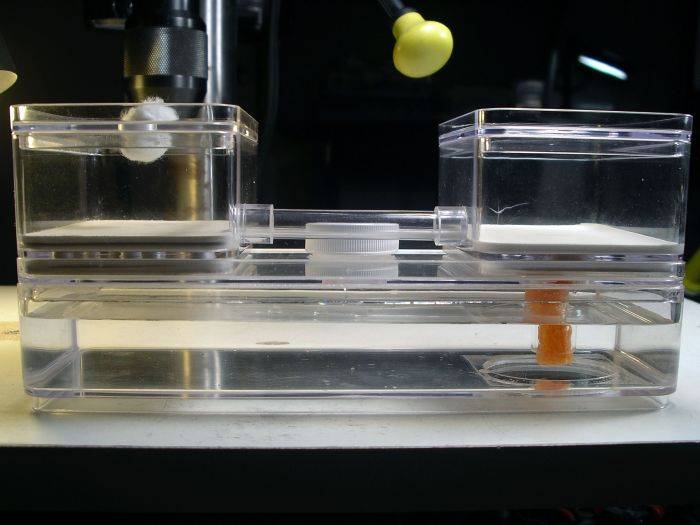
med_gallery_2_281_430580.jpg
This is what the top (floor of the top container) looks like after eight hours or so.
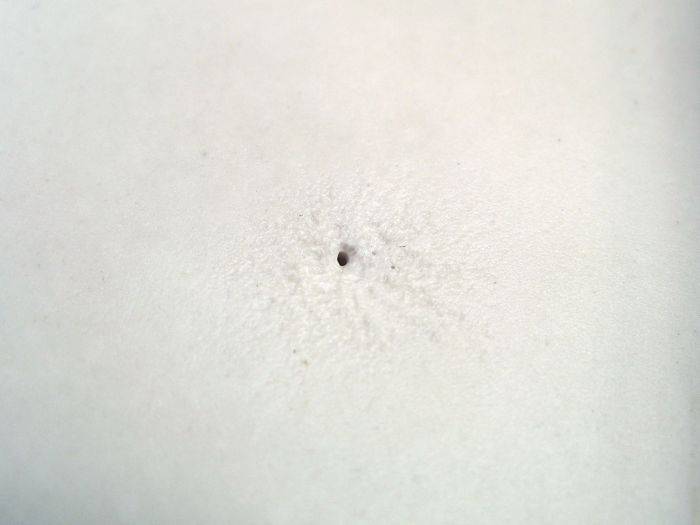
med_gallery_2_281_415442.jpg
This is the bottom of the top container (directly below the hole in the first picture). This is what actually sits on the sponge.
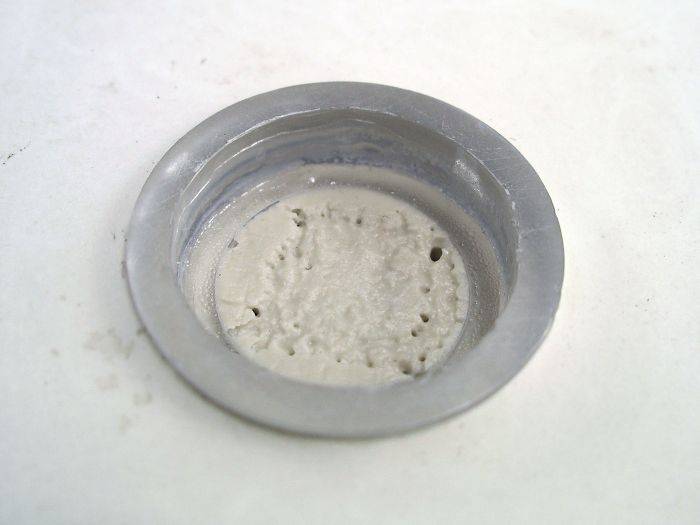
med_gallery_2_281_500747.jpg
This is the bottom magnified.

med_gallery_2_281_151665.jpg


Hydrostone is made up of >95% Plaster of Paris, <5% Portland Cement, and <5% Crystalline Silica.
The MSDS can be found here: http://www.usg.com/content/dam/USG_...ydro-stone-gypsum-cement-msds-en-52140052.pdf

The water used is typical bottled water.

Quite a few people I know have suggested this could be a pH issue causing calcium to dissolve.

If anyone can tell me what might be happening here, and if there's a way to stop it, it would be much appreciated.
 
Last edited:
Chemistry news on Phys.org
dspdrew said:
>95% Plaster of Paris,
Not a pH problem. Plaster of Paris dissolves in water.
The water is just to control humidity for the ants? Not an actual source of drinking water? If that's the case, saturate the water in the tray underneath with broken hydrostone plates, or plaster shards. No concentration gradient in the wick, no transport of dissolved gypsum down the wick to the water tray.
 
Interesting. The water actually serves both functions. The particular type of ants that this specific formicarium is for, are called Leaf Cutter Ants. They garden a type of fungus that requires near 100% humidity at all times.

For the sake of not complicating the post too much, I didn't mention that I actually tried something much like what you just suggested, except I was doing it in hopes to balance the pH. I poured a 1/8 inch layer of Hydrostone in the bottom of the water tank, which seemed to have solved the problem at first. The only thing is when I did this, because the tubes that support the sponge were so close to the bottoms of the tanks, this left a very small crack to allow the water to flow through to the sponge, that it slowed down the rate of absorption. Once I modified it to allow another 1/8 inch of clearance again, the rate of absorption was back up, and the holes started to form again. I'll still try exactly what you mentioned, but do you think maybe actually pouring some Hydrostone while still in powder form into the water would do the same? Also, wouldn't it be possible to put water filters on the ends of the tube supporting the sponge so that it would only have to saturate the water in the sponge?
 
Last edited:
dspdrew said:
water filters
It's IN solution --- no filter for that. The sponge/wick is going to be a substrate for the fungus isn't it, so you have to have something between it and the garden. Any "Hydrostone" mixes that are higher in cement concentrations?
 
dspdrew,

Why is Hydrostone (other than the errosion problem) a good material for your design? Why not concrete or terra cotta?
 
Yes, UltraCal 30 has roughly double the portland cement, according to the MSDS.

It probably wouldn't be too difficult to make a custom blend, given the simplicity.
 
Up until now I thought Hydrostone was mostly concrete, but now that I know it's not, concrete does sound like an option. Terra cotta, or other clay-based materials would work great, except they either need to be fired, or if they're already fired, they would need to be cut and fit into the containers, which would not be easy. However, a bisque or unglazed ceramic tile was actually my next best solution; I just wanted to make sure I wasn't overlooking something about the Hydrostone that could be easily fixed. At this point, it doesn't sound like it can be, so I probably will go with the ceramic tile, but first I do want to explore the concrete idea.
 
dspdrew said:
concrete does sound like an option.
Thin slabs of ordinary concrete tend to crack. If you need thin slabs , try the type that's made for leveling floors. You can find concrete reinforcing fibers for sale on Amazon and they are useful for thin slabs.
 
Thanks everyone for your help. I'll give these ideas a try and let you know how it turns out.