Math Amateur
Gold Member
MHB
- 3,920
- 48
I am reading Houshang H. Sohrab's book: "Basic Real Analysis" (Second Edition).
I am focused on Chapter 2: Sequences and Series of Real Numbers ... ...
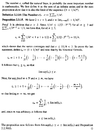
I need help with yet another aspect of the proof of Proposition 2.3.15 ...Proposition 2.3.15 and its proof read as follows:
View attachment 9073
At the end of the above proof by Sohrab we read the following:
" ... ... The proposition now follows from $$\text{ lim sup } (t_n) \leq e \leq \text{ lim inf } (t_n)$$ and Proposition 2.2.39 (f) ... ... "But ... as far as I can tell from Proposition 2.2.39 (f) we require $$\text{ lim sup } (t_n) = e = \text{ lim inf } (t_n)$$ ... in order to conclude $$\text{ lim } (t_n) = e$$ ...
... but we only have the condition $$\text{ lim sup } (t_n) \leq e \leq \text{ lim inf } (t_n)$$ ... ...
So ... how does the proposition 2..3.15 follow ...?
Can someone please clarify the situation above ...
Help will be appreciated ...
Peter
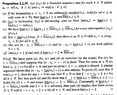
=========================================================================The above post refers to Proposition 2.2.39 ... so I am providing text of the same ... as follows ... :
View attachment 9074
Hope that helps ...
Peter
Attachments