MHB Proving that the sum of 2 measurable functions is measurable

Click For Summary
SUMMARY

The discussion centers on proving that the sum of two measurable functions, \( f \) and \( g \), is also measurable. The definitions provided in the book state that a non-negative measurable function can be expressed as the limit of a non-decreasing sequence of non-negative simple functions. The challenge arises when both functions can take on positive and negative values, particularly in constructing a non-decreasing sequence for the positive part of \( f + g \). Participants suggest using the standard definition of measurable functions, which simplifies the proof by focusing on measurable sets instead of sequences.

PREREQUISITES
  • Understanding of measurable functions and their definitions
  • Familiarity with non-decreasing sequences and simple functions
  • Knowledge of convergence concepts in real analysis
  • Ability to work with limits and inequalities in mathematical proofs
NEXT STEPS
  • Study the standard definition of measurable functions in terms of measurable sets
  • Learn about the properties of non-decreasing sequences in real analysis
  • Explore the construction of simple functions and their limits
  • Investigate proofs involving the sum of measurable functions using various definitions
USEFUL FOR

Mathematicians, students of real analysis, and anyone interested in the properties of measurable functions and their applications in mathematical proofs.

oblixps
Messages
35
Reaction score
0
I know there are many proofs for this but I am having trouble proving this fact using my book's definition.

My book defines first a non negative measurable function f as a function that can be written as the limit of a non decreasing sequence of non-negative simple functions.

Then my book defines that a function (taking on both positive and negative values) is measurable if both its positive part and negative part are measurable.

Let f and g be 2 measurable functions. Show that f + g is meaasurable as well.
If f and g are both non-negative, then it is clear that if $s_n$ is a nondecreasing sequence converging to f and $t_n$ is a nondecreasing sequence converging to g, then $s_n + t_n$ is a nondecreasing sequence converging to f + g.

However, I am having trouble with the more general case where f and g can take both positive and negative values. I am trying to show that the positive part of (f + g) is measurable, which means there exists a nondecreasing sequence of non-negative simple functions converging to $(f + g)^+$.

If I choose an x where f(x) and g(x) are non-negative, then it is clear how to construct such a sequence.

However, if I choose an x where f(x) > 0 and g(x) < 0 and f(x) + g(x) > 0, then I can represent this as $f^+ - g^-$. but i can't seem to come up with a sequence of functions converging to $f^+ - g^-$ AND is non decreasing. If $s_n$ is a nondecreasing sequence converging to $f^+$ and $t_n$ is a nondecreasing sequence converging to $g^-$, $s_n - t_n$ converges to $f^+ - g^-$ but it may not be a non decreasing sequence.

Can someone help me with this problem?
 
Last edited:
Physics news on Phys.org
To make sure we have a non decreasing sequence
we will abandon some terms to make sure
s_n - t_n is a non decreasing

f(x) - g(x) &gt; 0

take \epsilon &lt; \frac{f(x) - g(x) }{2}

from the convergence we will have n_o \in \mathbb{N}
and m_o \in \mathbb{N}

such that \mid f_n - f(x) \mid &lt; \epsilon for all n &gt; n_o
and \mid g_n - g(x) \mid &lt; \epsilon for all n &gt;m_o

let r = max( n_o , m_o )
s_n - t_n is non decreasing for all n &gt; r
 
oblixps said:
I know there are many proofs for this but I am having trouble proving this fact using my book's definition.

My book defines first a non negative measurable function f as a function that can be written as the limit of a non decreasing sequence of non-negative simple functions.

Then my book defines that a function (taking on both positive and negative values) is measurable if both its positive part and negative part are measurable.

Let f and g be 2 measurable functions. Show that f + g is measurable as well.
That is a terrible way to define a measurable function. The usual approach is to define measurable functions in terms of measurable sets. Then a function $f$ is said to be measurable if for every real number $\alpha$ the set $\{x:f(x)>\alpha\}$ is measurable. In that case, if $f$ and $g$ are measurable functions then the set $\{x:f(x) + g(x)>\alpha\}$ is the union of the sets $\{x:f(x)>r\}\cap \{x:g(x)>\alpha - r\}$ as $r$ runs through the rational numbers. That is a countable union of measurable sets and is therefore measurable.

Starting from your book's definition of measurability, it does not even seem easy to show that the sum of a measurable function and a constant function is measurable.
 
Amer, could you explain a little more why $s_n - t_n$ must be non decreasing for n > r?
I don't really see how that follows from knowing $|s_n(x) - f(x)| < \epsilon$ and $|t_n(x) - f(x)| < \epsilon$. These expressions tell us how to bound $s_n - t_n$ for each n, but doesn't seem to give us a relationship between the nth and (n+1)th term.

Opalg, I agree that the more standard definition of a measurable function makes this problem much easier to prove.

thank you for both of your answers!
 
oblixps said:
Amer, could you explain a little more why $s_n - t_n$ must be non decreasing for n > r?
I don't really see how that follows from knowing $|s_n(x) - f(x)| < \epsilon$ and $|t_n(x) - f(x)| < \epsilon$. These expressions tell us how to bound $s_n - t_n$ for each n, but doesn't seem to give us a relationship between the nth and (n+1)th term.

Opalg, I agree that the more standard definition of a measurable function makes this problem much easier to prove.

thank you for both of your answers!

f(x) > g(x)
f(x) - g(x) &gt; 2\epsilon

since t_n is non decreasing, so t_n \leq f(x)
and s_n is non decreasing so s_n \leq g(x)

for n>r
\mid f(x) - t_n \mid &lt; \frac{f(x) - g(x) }{2}
we can take it without the absolute value since f(x) > tn
f(x) - t_n &lt; \frac{f(x) - g(x) }{2} &lt; f(x) - g(x)
f(x) - t_n &lt; f(x) - g(x)
0 &lt; t_n - g(x) for n>r

but g(x) &gt; s_n
0 &lt; t_n - g(x) &lt; t_n - s_n , for n>r

t_n \leq t_{n+1} \Rightarrow 0 \leq t_{n+1} -t_n + s_{n+1} - s_{n+1} \leq t_{n+1} - s_{n+1} - t_n + s_n since s_n \leq s_{n+1}
This
0 \leq t_{n+1} - s_{n+1} - ( t_n - s_n ) so t_n - s_n is non decreasing
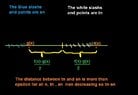
Here is a picture for what I did and the epsilon I took
View attachment 1472

I hope of solution is clear now
Edited: :(
I made a mistake sorry, if we have t_{n+1} = t_n
and s_{n+1} &gt; s_n
we get t_{n+1} - s_{n+1} &lt; t_n - s_n
Thinking of something else
 

Attachments

  • Untitled.jpg
    Untitled.jpg
    27.6 KB · Views: 135
Last edited:

Similar threads

  • · Replies 1 ·
Replies
1
Views
2K
  • · Replies 5 ·
Replies
5
Views
3K
  • · Replies 2 ·
Replies
2
Views
2K
  • · Replies 1 ·
Replies
1
Views
2K
  • · Replies 4 ·
Replies
4
Views
2K
  • · Replies 4 ·
Replies
4
Views
2K
Replies
2
Views
2K
  • · Replies 2 ·
Replies
2
Views
2K
  • · Replies 2 ·
Replies
2
Views
2K
  • · Replies 10 ·
Replies
10
Views
4K