SUMMARY
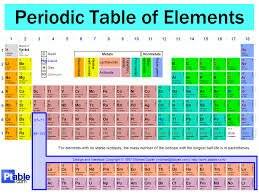
The discussion centers on the hypothetical reaction involving all 118 elements of the periodic table. It concludes that if these elements were mixed at normal temperature, the outcome would be a complex and unpredictable mixture of products, influenced by the reactivity of the elements involved. More reactive elements would react quickly, while less reactive ones might remain inert. The conversation also touches on the challenges of predicting the thermodynamically stable configuration of such a mixture, particularly due to the lack of data on heats of formation for all elements.
PREREQUISITES
- Understanding of basic chemistry concepts, including elements and reactions.
- Familiarity with the periodic table and element reactivity.
- Knowledge of thermodynamics, particularly stability and energy states.
- Awareness of nuclear fission and fusion principles.
NEXT STEPS
- Research the reactivity series of elements to understand which elements react under normal conditions.
- Explore thermodynamic principles, focusing on heats of formation and stability of compounds.
- Study nuclear chemistry, particularly the processes of fission and fusion.
- Investigate Randall Munroe's works for creative thought experiments related to chemistry.
USEFUL FOR
Students, chemistry enthusiasts, and educators interested in the complexities of elemental reactions and thermodynamic stability.