soggybread
- 20
- 0
Ridiculously simple acceleration and velocity vectors, but I can't get them...
We're supposed to answer a series of questions based on this diagram, but I am so confused by the answers.
A car travels at constant speed along the curved path shown in the figure below. Five possible vectors are also shown in the figure; the letter E represents the zero vector.
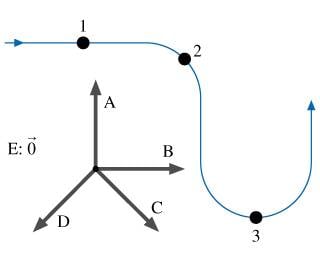
These are the 3 questions (along with the correct answers from the key):
1. Which vector best represents the car's acceleration at point 1?
answer: E
2. Which vector best represents the car's acceleration at point 2?
answer: D
3. Which vector best represents the car's acceleration at point 3?
answer: A
I don't get these answers at all, first the question tells me the car is traveling at a constant speed, (which I answered in question 1, E) Then it says it's D for question 2, then it's A for question 3? I don't get how these vectors connect together at all, and it's completely stumped me.
Thanks.
We're supposed to answer a series of questions based on this diagram, but I am so confused by the answers.
Homework Statement
A car travels at constant speed along the curved path shown in the figure below. Five possible vectors are also shown in the figure; the letter E represents the zero vector.
These are the 3 questions (along with the correct answers from the key):
1. Which vector best represents the car's acceleration at point 1?
answer: E
2. Which vector best represents the car's acceleration at point 2?
answer: D
3. Which vector best represents the car's acceleration at point 3?
answer: A
I don't get these answers at all, first the question tells me the car is traveling at a constant speed, (which I answered in question 1, E) Then it says it's D for question 2, then it's A for question 3? I don't get how these vectors connect together at all, and it's completely stumped me.
Thanks.