vasanth
- 1
- 0
- TL;DR
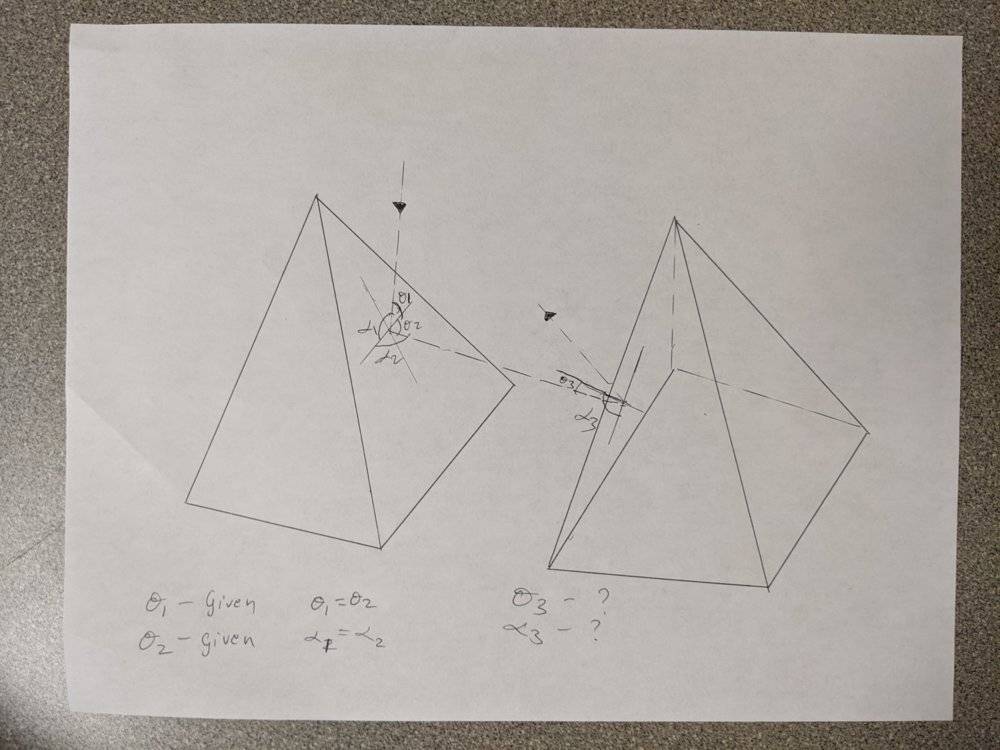
- Given Theta1(angle of incidence) and alpha1(azimuth angle). how do we obtain the second reflection angle theta3 and alpha3?
Given Theta1(angle of incidence) and alpha1(azimuth angle). how do we obtain the second reflection angle theta3 and alpha3?
Assuming the surface to be a mirror reflection(theta1 = theta2). Need an equation when varied the incident angles we would obtain the second reflection angles or a method to do so.
please view the image for better understanding.
The pyramids are equally spaced of equal height and equal base length and same level(can also assume more number of pyramids in the x and y directions making z to be the height).
The angle of the pyramid can be a assumed(like 60 degree).
The given data is the first angles of incidence and reflection(assuming mirror reflection).
the unknown value is the second angles of incidence(forming or derived from the reflected or scattered)
also assuming the range of first incidence angles which will have a second reflection.
Thank you for your time and consideration.
Assuming the surface to be a mirror reflection(theta1 = theta2). Need an equation when varied the incident angles we would obtain the second reflection angles or a method to do so.
please view the image for better understanding.
The pyramids are equally spaced of equal height and equal base length and same level(can also assume more number of pyramids in the x and y directions making z to be the height).
The angle of the pyramid can be a assumed(like 60 degree).
The given data is the first angles of incidence and reflection(assuming mirror reflection).
the unknown value is the second angles of incidence(forming or derived from the reflected or scattered)
also assuming the range of first incidence angles which will have a second reflection.
Thank you for your time and consideration.