SEM-EDX Analysis Summary: Identifying Material

  • Thread starter Thread starter Yel744
  • Start date Start date
  • Tags Tags
    Analysis
Click For Summary
SUMMARY

The forum discussion centers on identifying a biological sample using SEM-EDX analysis, specifically focusing on hair-like structures resembling human hair, with a thickness similar to it. The user speculates that the sample may be a leaf or an insect, but struggles to find a silicon-based organism that fits these characteristics. The discussion highlights the challenges of identifying materials based solely on limited SEM-EDX data and emphasizes the need for further research into silicon species in biological contexts.

PREREQUISITES
  • Understanding of SEM-EDX analysis techniques
  • Knowledge of biological materials and their structures
  • Familiarity with silicon compounds and their biological roles
  • Ability to interpret microscopy images
NEXT STEPS
  • Research silicon-based biological materials, focusing on siliceous sponges
  • Explore SEM-EDX analysis methodologies for material identification
  • Investigate the biological significance of silicon in various organisms
  • Study microscopy techniques for better interpretation of biological samples
USEFUL FOR

Students in materials science, biologists studying silicon-based organisms, and researchers utilizing SEM-EDX for material identification will benefit from this discussion.

Yel744
Messages
3
Reaction score
1
Homework Statement
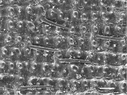
This is a biological sample. Guess what sample is this?
Relevant Equations
SEM-EX results
Summary:: SEM-EDX Analysis

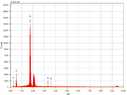
Hi! Just would like to ask for some insights. I needed to identify the material based on its SEM-EDX results. However, after several researches, I still have no idea what it is. Any idea would help. thanks.

Edit:

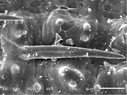
Another information given to me was that this is a biological sample. Hence, I started my analysis with the idea that this is a biological sample with hairy-like structures. These "hair-like" structures are very much hairlike as the SEM shows that it is of similar thickness with an average human hair. Furthermore, these hair-like structures are less than half a centimeter long only. I was thinking it might be a leaf with hairy features but I couldn't seem to find a leaf that is mainly composed of silicon. I then thought that it might be some sort of an insect, yet, still, I couldn't find any insect that's basically like an Si-O species.
 

Attachments
  • image (3).png
    image (3).png
    149.1 KB · Views: 159
  • image (2).png
    image (2).png
    194 KB · Views: 130
  • image (1).png
    image (1).png
    28.8 KB · Views: 139
Last edited:
Physics news on Phys.org
Welcome to PF.

What other information do you have about this material? Where did you get it? Or is this a schoolwork assignment where this is the only information you are given?
 
berkeman said:
Welcome to PF.

What other information do you have about this material? Where did you get it? Or is this a schoolwork assignment where this is the only information you are given?
Hi, thanks for this response. Yes, this is school work and these are the only information given. If only I have any idea on what possible silicon species this is.
 
Okay, I'll move this thread to the schoolwork forums then. Please tell us more about your thoughts on this. You need to show your best efforts to address this question before we can be of tutorial help.
 
Another information given to me was that this is a biological sample. Hence, I started my analysis with the idea that this is a biological sample with hairy-like structures. These "hair-like" structures are very much hairlike as the SEM shows that it is of similar thickness with an average human hair. Furthermore, these hair-like structures are less than half a centimeter long only. I was thinking it might be a leaf with hairy features but I couldn't seem to find a leaf that is mainly composed of silicon. I then thought that it might be some sort of an insect, yet, still, I couldn't find any insect that's basically like an Si-O species.
 
  • Like
Likes   Reactions: berkeman
They are less than half a millimetre long. (Which is, admittedly, less than half a centimetre.)
I don't know what this is, but the Wikipedia article on silicon suggests some possibilities (see "biological role").
 
  • Informative
Likes   Reactions: berkeman

Similar threads

  • · Replies 3 ·
Replies
3
Views
2K
  • · Replies 7 ·
Replies
7
Views
2K
Replies
20
Views
4K
  • · Replies 8 ·
Replies
8
Views
3K
  • · Replies 8 ·
Replies
8
Views
914
  • · Replies 5 ·
Replies
5
Views
2K
  • · Replies 15 ·
Replies
15
Views
3K
  • · Replies 6 ·
Replies
6
Views
3K
  • · Replies 17 ·
Replies
17
Views
5K
Replies
1
Views
3K