Should You Use Contests and Prizes to Motivate Kids to Learn Physics?

  • Context: High School 
  • Thread starter Thread starter Ivan Seeking
  • Start date Start date
  • Tags Tags
    Kids Physics
Click For Summary

Discussion Overview

The discussion revolves around the use of contests and monetary prizes as a means to motivate children to learn physics, specifically through the example of a challenge involving a book on relativity. Participants explore the implications of using financial incentives in educational contexts and the potential impact on children's engagement with complex subjects.

Discussion Character

  • Debate/contested
  • Exploratory

Main Points Raised

  • One participant shares an experience of offering a monetary prize to children for reading a book on relativity, suggesting that this unique motivation may encourage them to engage with challenging material.
  • Another participant questions whether using money as an incentive promotes greed or possession-focused motivation, raising ethical considerations about such practices.
  • Some participants argue that the contest is more about creating a goal and competitive environment rather than simply bribing the children, suggesting that it could foster a genuine interest in physics.
  • There is mention of the children's potential interest in math and sciences, with one participant expressing optimism about their future engagement in these fields.

Areas of Agreement / Disagreement

Participants express differing views on the appropriateness of using financial incentives for motivation. While some see it as a beneficial strategy to spark interest, others raise concerns about the implications of such an approach. The discussion remains unresolved regarding the ethical considerations and effectiveness of this method.

Contextual Notes

Participants acknowledge the long-term nature of the challenge, indicating that it is not a quick reward but rather a sustained effort that may take years to yield a winner. This aspect adds complexity to the motivations involved.

Ivan Seeking
Staff Emeritus
Science Advisor
Gold Member
Messages
8,252
Reaction score
2,664
I think I made a post about this in random thoughts but thought it might make a good thread.

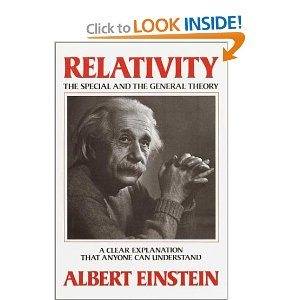
About a month ago we had my sister and her family visiting. At that time I presented a challenge to the kids - ages ~ 10, 12, and 13 - that they seem to have taken to heart. I gave them my first book on Relativity, Einstein's Relativity: The Special and the General Theory--A Clear Explanation that Anyone Can Understand. I then offered $50 to the one who could read and understand this book at the youngest age.

Their grandfather on their father's side is a retired nuclear engineer [Ph.D., MIT]. You can imagine his surprise and excitement when, this weekend, his ten-year-old grand-daughter asked him to summarize the Theory of Relativity for her!
518262VERFL._BO2,204,203,200_PIsitb-sticker-arrow-click,TopRight,35,-76_AA300_SH20_OU01_.jpg


Using money to bribe kids to learn? Not something that I would generally approve of, but I know there is no way they would ever take on something that challenging without unique motivation. By making it a contest between the siblings, with a prize, and a chance for the youngest to win, it presented a unique opportunity to open little minds. No doubt that for many of us, our first exposure to Relativity was a life-changing experience. So this seemed like a pretty good deal for $50. I couldn't be more thrilled that over a month later, they're thinking about it.
 
Last edited:
Physics news on Phys.org
Ivan Seeking said:
I think I made a post about this in random thoughts but thought it might make a good thread.

About a month ago we had my sister and her family visiting. At that time I presented a challenge to the kids - ages ~ 10, 12, and 13 - that they seem to have taken to heart. I gave them my first book on Relativity, Einstein's Relativity: The Special and the General Theory--A Clear Explanation that Anyone Can Understand. I then offered $50 to the one who could read and understand this book at the youngest age.

Their grandfather on their father's side is a retired nuclear engineer [Ph.D., MIT]. You can imagine his surprise and excitement when, this weekend, his ten-year-old grand-daughter asked him to summarize the Theory of Relativity for her!

518262VERFL._BO2,204,203,200_PIsitb-sticker-arrow-click,TopRight,35,-76_AA300_SH20_OU01_.jpg


Using money to bribe kids to learn? Not something that I would generally approve of, but I know there is no way they would ever take on something that challenging without unique motivation. By making it a contest between the siblings, with a prize, and a chance for the youngest to win, it presented a unique opportunity to open little minds. No doubt that for many of us, our first exposure to Relativity was a life-changing experience. So this seemed like a pretty good deal for $50. I couldn't be more thrilled that over a month later, they're thinking about it.

Are kids motivated by possessions or greed, and -even if- should that be promoted, or not?

I take some of the Islamic criticism on western society serious, though I am sometimes undecided on it. (Like: capitalism leads to the degradation (selling-off) of women.)

It led to a minor conflict in my (ex-)family. Should my two daughters share possessions (my view), or should each of them own their possessions (the horrible ex). Who knows?
 
Well, I hope to see those 3 as PF members soon! :biggrin:
 
MarcoD said:
Are kids motivated by possessions or greed, and -even if- should that be promoted, or not?

I understand your point. However, while I too thought about your concerns, this was really more of a trick than a bribe. I suspect that at least two of the three may have strong tendencies towards math and the sciences. The point isn't to pay them to learn physics, it was to create a goal and a competitive circumstance that would motivate them to try. If the spark is there, they will fall in love with the logic regardless of the money. This was just intended to give them an early start.

Also, they understood that this wasn't a quick challenge - a quick buck. It will surely be at least three to five years before someone wins.

I would add that the op is in no way meant to limit the discussion. It was just the motivation for the thread.
 
micromass said:
Well, I hope to see those 3 as PF members soon! :biggrin:

The youngest has already been in math competitions and was highly dedicated. She did well but was heartbroken when she lost! I think she's a ringer for the sciences. So far it's hard to tell with the other two. They are all bright so I could see all three going this direction.
 

Similar threads

  • · Replies 3 ·
Replies
3
Views
2K
  • · Replies 9 ·
Replies
9
Views
819
  • · Replies 7 ·
Replies
7
Views
4K
  • · Replies 4 ·
Replies
4
Views
5K
  • · Replies 8 ·
Replies
8
Views
4K
  • · Replies 3 ·
Replies
3
Views
4K
  • · Replies 10 ·
Replies
10
Views
2K
  • · Replies 17 ·
Replies
17
Views
5K
  • · Replies 27 ·
Replies
27
Views
5K
  • · Replies 29 ·
Replies
29
Views
3K