goyalvishal4
- 5
- 0
A spin 1/2 particle A undergoes decay A→B+C+D Where it is known that B and C are also spin 1/2. The complete set of allowed values of spin of D
It was a Multiple Choice Question and options given were
1) 1/2,1,3/2,2,5/2,3,...
2) 0,1
3) 1/2 only
4) 1/2,3/2,5/2,7/2,...
I tried the question as below
complete set of possibilities of spin combination taking into consideration the conservation of spin quantum number are listed in a table below
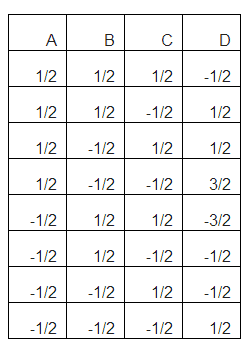
Thus the complete set of allowed values of spin for particle D is [1/2, 3/2] which was nowhere in options, hence I thought all four options were wrong. However the option (3) [1/2 only] makes most sense as it does not contain any value which isn't allowed hence not complete but is at least set of allowed values, while they have selected option (4) as correct one which contain 5/2, 7/2 which are not allowed value in any way.
Am I wrong somewhere and there be some other point I missing??
It was a Multiple Choice Question and options given were
1) 1/2,1,3/2,2,5/2,3,...
2) 0,1
3) 1/2 only
4) 1/2,3/2,5/2,7/2,...
I tried the question as below
complete set of possibilities of spin combination taking into consideration the conservation of spin quantum number are listed in a table below
Thus the complete set of allowed values of spin for particle D is [1/2, 3/2] which was nowhere in options, hence I thought all four options were wrong. However the option (3) [1/2 only] makes most sense as it does not contain any value which isn't allowed hence not complete but is at least set of allowed values, while they have selected option (4) as correct one which contain 5/2, 7/2 which are not allowed value in any way.
Am I wrong somewhere and there be some other point I missing??