Discussion Overview
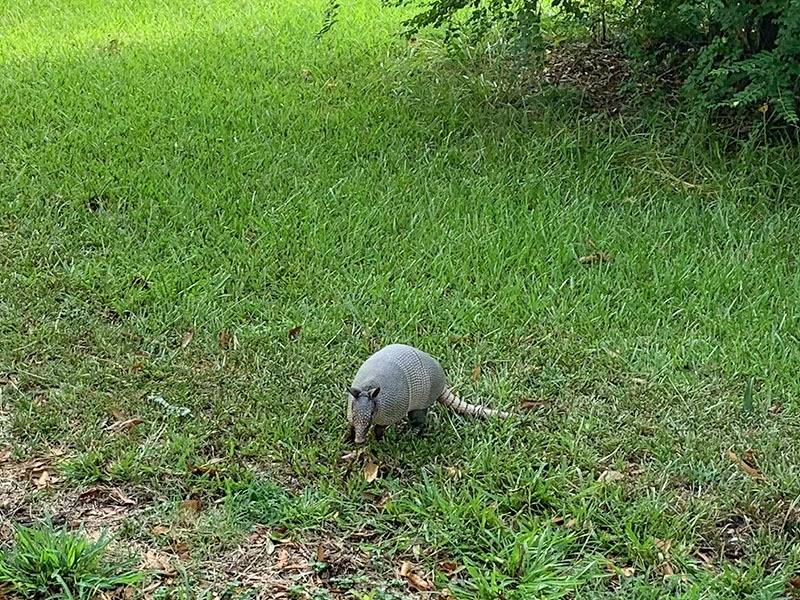
The discussion revolves around the increasing presence of armadillos in South Carolina, touching on their behavior, reproduction, and ecological implications. Participants share personal observations and anecdotes, while also referencing cultural perceptions and interactions with other wildlife.
Discussion Character
- Exploratory
- Conceptual clarification
- Debate/contested
Main Points Raised
- Some participants note personal sightings of armadillos, indicating a growing population in South Carolina.
- There are humorous remarks about armadillos leaving Texas, suggesting a cultural narrative around their migration.
- One participant mentions that armadillos give birth to identical quadruplets, citing information from someone with academic experience.
- Another participant claims that armadillos are a natural predator of fire ants, linking their presence to the local ecosystem.
- Concerns are raised about coyotes potentially preying on armadillos, with a participant noting they have not seen coyotes in their area.
- There are playful references to the use of armadillos in racing, highlighting cultural perceptions of the animal.
- One participant humorously mentions the potential danger of armadillo tails, claiming they have poisonous barbs, although this is presented with skepticism.
Areas of Agreement / Disagreement
Participants share various observations and anecdotes about armadillos, but there is no consensus on their ecological role or the accuracy of certain claims regarding their reproduction and behavior.
Contextual Notes
Some statements rely on anecdotal evidence and personal experiences, which may not be universally applicable. The discussion includes speculative claims about armadillo behavior and interactions with other species.
Who May Find This Useful
Individuals interested in local wildlife, ecological interactions, and cultural narratives surrounding animals may find this discussion engaging.