Discussion Overview
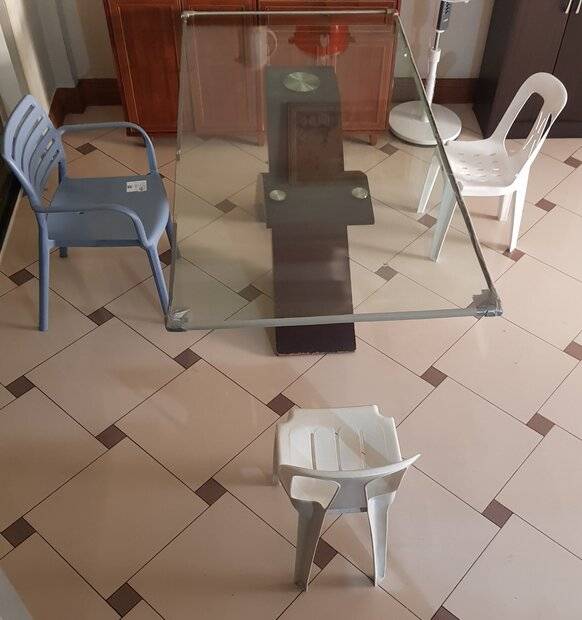
The discussion revolves around the behavior and safety of tempered glass, particularly in the context of a cantilevered tempered glass table. Participants explore how tempered glass breaks, the identification of tempered versus ordinary glass, and safety concerns related to potential breakage.
Discussion Character
- Exploratory
- Technical explanation
- Debate/contested
Main Points Raised
- Some participants describe how tempered glass typically breaks into small pieces quickly, but caution that experiences may vary by product.
- There are inquiries about how to determine if a table is made of tempered glass, with suggestions to look for markings or perform a polarization test.
- Concerns are raised about the safety of tempered glass in various applications, including tables and windows, particularly regarding the potential for sudden breakage.
- Some participants suggest that ordinary glass might be used in tables, raising questions about the strength and safety of such materials.
- There are recommendations to replace the table if there are doubts about its safety, with some proposing alternatives like plywood tops.
Areas of Agreement / Disagreement
Participants express varying views on the safety and behavior of tempered glass, with no consensus on the specific circumstances under which it may break or the best methods for identifying it. Concerns about safety remain unresolved.
Contextual Notes
Participants mention limitations in their knowledge about specific products and the variability in glass behavior, depending on factors such as thickness and manufacturing processes.