Today I Learned

  • Thread starter Thread starter Greg Bernhardt
  • Start date Start date
Click For Summary
SUMMARY

This discussion revolves around the concept of daily learning, where participants share various facts and insights they have recently discovered. Key topics include the woodworking technique "oyster veneering," the mathematical fact that 23! equals 25,852,016,738,884,976,640,000, and the medical terms "hyperacusis" and "diplacusis." Participants also touch on humorous observations about life, such as the impact of television on weight and the emotional sensitivity of Barn Owls.

PREREQUISITES
  • Understanding of basic mathematical concepts, specifically factorials.
  • Familiarity with woodworking techniques, particularly historical methods like oyster veneering.
  • Knowledge of medical terminology related to hearing, such as hyperacusis and diplacusis.
  • Awareness of cultural references, including the significance of historical events and figures like Muhammad Ali.
NEXT STEPS
  • Research the historical context and revival of oyster veneering in woodworking.
  • Explore advanced mathematical concepts related to factorials and their applications.
  • Investigate the medical conditions hyperacusis and diplacusis, including their causes and treatments.
  • Learn about the emotional behaviors of animals, particularly Barn Owls and their sensitivity.
USEFUL FOR

This discussion is beneficial for woodworking enthusiasts, mathematicians, medical professionals, and animal behaviorists, as well as anyone interested in the quirky facts of daily life.

  • #3,721
Last edited:
Physics news on Phys.org
  • #3,722
pinball1970 said:
Is there a thing with cicadas and primes?
Oh, yes.

The Cicada’s Love Affair With Prime Numbers

cicadas-prime-580.jpg
 
  • Wow
Likes   Reactions: rsk
  • #3,723
Today I found two examples of weird large derivatives appearing:
A particle bouncing inside a convex region can be a chaotic system. But the motion cannot be chaotic if the 553rd derivative of its boundary is continuous (Lazutkin, 1973). Later work improved that requirement down to the 6th derivative. Discussed by @john baez in 2016: Blog article

If you take the Minkowski sum (##\{a+b:a\in A,b\in B\}##) of convex subsets A, B of ##\mathbb{R}^2## with real-analytic boundaries then the boundary of A+B is guaranteed to be "6+2/3" times differentiable.
 
  • Like
Likes   Reactions: dextercioby
  • #3,724
pinball1970 said:
I do not feel good about anything with more than 4 legs.
Is there a thing with cicadas and primes?
Cicadas are cute and harmless -- as a child we used to catch them, trying to collect as many different varieties as possible. There were quite a few names, but now I only remember "Green Grocer", "Black Prince", "Yellow Monday(?)", "Pizz Whacker" (don't ask) ...
 
  • Like
Likes   Reactions: BillTre
  • #3,725
Today I learned that if you don't have a spare CR2032 battery handy, two CR2016s, stacked, will do the job nicely.
 
  • Wow
  • Haha
  • Informative
Likes   Reactions: BillTre, hmmm27, jedishrfu and 1 other person
  • #3,726
That one of the weirdest things in numerology that I've ever seen is this:

111,111,111 x 111,111,111 = 12345678987654321 [counts up 1 to 8 then down 8 to 1 but with a 9 in the middle)

What has me flummoxed is NOT the math so much as who in hell every happened to SEE it ? I mean, whoever it was has WAY too much spare time on their hands.
 
  • Like
Likes   Reactions: BillTre
  • #3,727
I think this comes from playing with 1 x 1 = 1, 11 x 11 = 121, 111 x 111 = 12321 ... so naturally someone would extend the sequence to the limit of disbelief.
 
  • Like
  • Informative
Likes   Reactions: diogenesNY, BillTre and phinds
  • #3,728
phinds said:
whoever it was has WAY too much spare time on their hands.

Code:
         111111111
        x111111111
        __________
         111111111
        111111111
       111111111
      111111111
     111111111
    111111111
   111111111
  111111111
 111111111
_________________
 12345678987654321
 
  • Like
  • Informative
Likes   Reactions: DaveC426913, pinball1970, strangerep and 3 others
  • #3,729
 
  • Like
Likes   Reactions: collinsmark and jedishrfu
  • #3,730
phinds said:
That one of the weirdest things in numerology that I've ever seen is this:

111,111,111 x 111,111,111 = 12345678987654321 [counts up 1 to 8 then down 8 to 1 but with a 9 in the middle)

What has me flummoxed is NOT the math so much as who in hell every happened to SEE it ? I mean, whoever it was has WAY too much spare time on their hands.
It's part of a pattern:
11 x 11 = 121
111 x 111 = 12321
1111 x 1111 = 1234321
etc.
 
  • Like
Likes   Reactions: BillTre
  • #3,731
Janus said:
It's part of a pattern:
11 x 11 = 121
111 x 111 = 12321
1111 x 1111 = 1234321
etc.
Or an even more general pattern$$\begin{align*}
(x+1)^2 &= x^2 + 2x + 1 \\
(x^2+x+1)^2 &=x^4 + 2x^3 + 3x^2 + 2x + 1
\end{align*}
$$etc.
 
  • #3,732
phinds said:
That one of the weirdest things in numerology that I've ever seen is this:

111,111,111 x 111,111,111 = 12345678987654321 [counts up 1 to 8 then down 8 to 1 but with a 9 in the middle)

What has me flummoxed is NOT the math so much as who in hell every happened to SEE it ? I mean, whoever it was has WAY too much spare time on their hands.
Yes, but this is what can be found playing with sequences of ones. However, who the heck found that:
$$2^n+7^n+8^n+18^n+19^n+24^n=3^n+4^n+12^n+14^n+22^n+23^n \text{ for } n =0,1,...,5$$
 
  • Like
Likes   Reactions: BillTre, Keith_McClary and jedishrfu
  • #3,733
Many genius level mathematicians have an incredible computation skill.

I remember the scene in the Ramanujan movie where one of the Oxford dons could do fast calculations and battled with Ramanujan to test his skill or something like that.

There also was that savant David Tamett who could do remarkable feats of calculation and memorization.
 
  • Like
Likes   Reactions: Keith_McClary and BillTre
  • #3,734
rsk said:
Today I learned that if you don't have a spare CR2032 battery handy, two CR2016s, stacked, will do the job nicely.
Only in devices that will tolerate a doubling of the voltage.
 
  • Like
  • Informative
Likes   Reactions: diogenesNY, Keith_McClary, pbuk and 2 others
  • #3,735
jedishrfu said:
Many genius level mathematicians have an incredible computation skill.
You know that puzzle with two trains that start 70km apart and travel in opposite directions, one at 30kph and one at 40kph and a fly that flies backwards and forwards between the trains at a constant 80kph (it's one o' them rocket propelled flies) - how far has the fly traveled when the trains meet? There's a popular theory that mathematicians given this problem spot that there are two geometric series to sum, but physicists shy away from the computation, and then note that the trains meet in an hour so the fly also travels for an hour, hence flies 80km.

There's a story of someone who decided to test that theory, and the first person he happens across is John von Neumann. He quickly lays out the problem and von Neumann says instantly "80km". The guy is a little crestfallen and explains to von Neumann that he had expected him, as a mathematician, to take the series sum solution rather than the easy way. "Ah," says von Neumann, looking a little embarrassed. "You're right, there is an easier way to do it."
 
  • Haha
  • Like
Likes   Reactions: Borg, collinsmark, jedishrfu and 1 other person
  • #3,736
DaveC426913 said:
Only in devices that will tolerate a doubling of the voltage.
I did wonder about this, but it seems to be ok.

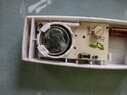
FWIW it's the button part of a wireless doorbell in my parents' home.
 
  • #3,737
rsk said:
I did wonder about this, but it seems to be ok.

FWIW it's the button part of a wireless doorbell in my parents' home.
Is their doorbell twice as loud now? :woot:
 
  • Like
Likes   Reactions: rsk
  • #3,738
DaveC426913 said:
Is their doorbell twice as loud now? :woot:
Button part. The bell part still has its regulation batteries. But now I'm scared that the post man or delivery man might get hurt when pushing the button

(nah, 6V not going to hurt anyone, right?)
 
  • #3,739
rsk said:
FWIW it's the button part of a wireless doorbell in my parents' home.
Several years ago I learned that if you buy a wireless doorbell and select one of the sixteen channels it can transmit on at random, your neighbour will also buy the same model and select the same channel. Neither of you get loads of unexpected visitors, so the one who actually has a visitor will usually be ready and let them in before the other has found his front door keys. So it will take some months for you to work out the cause of occasional "nobody there" bell rings...
 
  • Haha
Likes   Reactions: berkeman and rsk
  • #3,740
DaveC426913 said:
Only in devices that will tolerate a doubling of the voltage.
Yeah, don't try this at home kids. Youd be better off jamming some aluminium foil wrapped round cardboard in there.
 
  • #3,741
fresh_42 said:
However, who the heck found that:
$$2^n+7^n+8^n+18^n+19^n+24^n=3^n+4^n+12^n+14^n+22^n+23^n \text{ for } n =0,1,...,5$$
What computer found that?
Prouhet–Tarry–Escott_problem
 
  • Like
Likes   Reactions: fresh_42
  • #3,742
DaveC426913 said:
Only in devices that will tolerate a doubling of the voltage.

pbuk said:
Yeah, don't try this at home kids. Youd be better off jamming some aluminium foil wrapped round cardboard in there.
Heeding these warnings, I decided to rummage through my foreign coin collection to see if I had anything approximately battery sized and thin enough and yes, it works!

The odd thing about this is that the coin is a US dime and the only time I ever set foot in the USofA was to transit through Atlanta airport. I don't even know what a "dime" means.

But anyway, it's working, presumably at 3V instead of 6V and with a spare battery returned to the blister it came from.
 

Attachments

  • IMG_20210520_081713733_HDR.jpg
    IMG_20210520_081713733_HDR.jpg
    58.4 KB · Views: 116
  • #3,743
A penny is one cent, a nickel is five cents, dime is ten cents, a quarter is 25 cents, and a half dollar is 50 cents vs a US dollar which is 100 cents.

There may be some other more obscure US coins that are no longer in use But I don’t remember them.

oh yeah we even have a two dollar bill which my coworker would use to be different when shopping. They weren’t popular and caused havoc at the cash register because there weren’t enough drawer slots for all the common bills 1, 5, 10, and 20 and this one.
 
  • Like
Likes   Reactions: rsk
  • #3,744
Interesting fact, Cuba actually has notes worth 3 pesos. 1, 3, 5, 10, 20, 50 ... no 30s or 300s, just the 3.

This applied in both their CUP and CUC, but the latter (the convertible one pegged to the US$) has recently been removed from circulation - the currency, not just the 3 peso note.
 
  • #3,745
rsk said:
But anyway, it's working, presumably at 3V instead of 6V and with a spare battery returned to the blister it came from.

Hang onto that extra battery. The cr2016 is less than half the capacity of the '32 so you'll be fiddling with it a lot sooner than if you just went to the store and bough the right battery.
 
  • Like
  • Informative
Likes   Reactions: Keith_McClary and rsk
  • #3,746
jedishrfu said:
dime is ten cents
A dime is also an assist in basketball...

https://basketballword.com/in-basketball-what-does-dropping-dimes-mean-explained/#

Many of us know basketball terminology but have no clue where terms may have come from or how they originated. Such is the case with the saying dropping dimes.

What does dropping dimes mean in basketball? In basketball, the term dropping dimes refers to an assist, in which a player will make a pass to a teammate which leads to scoring a basket. The dime we are talking about is the ten-cent coin that was needed to use a payphone. Putting a 10 cent coin into the payphone was known as dropping a dime.

A dime may be an easy or difficult pass that would lead to a score in basketball. The saying would usually come from the player that acquired the assist, or by fans watching the player do so. “He’s dropping dimes”.
 
  • Like
Likes   Reactions: rsk
  • #3,747
rsk said:
Interesting fact, Cuba actually has notes worth 3 pesos. 1, 3, 5, 10, 20, 50 ... no 30s or 300s, just the 3.

Apparently the U.S. used to have a three cent coin, way back when. Half penny, two cent, and twenty cent coins as well.
 
  • Like
Likes   Reactions: rsk
  • #3,748
JT Smith said:
Hang onto that extra battery. The cr2016 is less than half the capacity of the '32 so you'll be fiddling with it a lot sooner than if you just went to the store and bough the right battery.
Just as soon as it stops raining.
 
  • #3,749
jedishrfu said:
A penny is one cent, a nickel is five cents, dime is ten cents, a quarter is 25 cents, and a half dollar is 50 cents vs a US dollar which is 100 cents.
Is the half dollar actually used?
There are 1 dollar coins.
https://en.wikipedia.org/wiki/Dollar_coin_(United_States)

For some reasons your 5 cent coin is larger than the 10 cent coin, and apparently 50 cent is larger than 1 dollar as well.
 
  • #3,750
mfb said:
Is the half dollar actually used?
Not very often. Dollar coins are also not seen frequently. For that matter, who uses cash anymore? Since the pandemic shut down I think I've paid in cash about five times.

The $2 paper bill is also kind of rare. You can get them at the bank if you want. A friend owed me a couple hundred dollars and paid me with 100 of them just for fun!
 

Similar threads

Replies
26
Views
6K
  • · Replies 161 ·
6
Replies
161
Views
14K
  • · Replies 4 ·
Replies
4
Views
2K
  • · Replies 9 ·
Replies
9
Views
2K
  • · Replies 3 ·
Replies
3
Views
3K
  • · Replies 14 ·
Replies
14
Views
2K
  • · Replies 27 ·
Replies
27
Views
6K
  • · Replies 5 ·
Replies
5
Views
2K
  • · Replies 3 ·
Replies
3
Views
2K
  • · Replies 5 ·
Replies
5
Views
4K