Unexpectly captured comet Comet C/2014 Q2 Lovejoy

  • Thread starter Thread starter davenn
  • Start date Start date
  • Tags Tags
    Comet
Click For Summary
SUMMARY

The forum discussion centers on the unexpected capture of Comet C/2014 Q2 Lovejoy during astrophotography sessions at Uluru, Australia. User Dave shared his experiences and camera settings, utilizing a Canon 5D Mark III with a 70-200mm f/2.8 IS II lens to photograph the comet amidst challenging conditions, including a bright moon. The discussion also highlights recent observations of magnetic storms affecting the comet's tail, as reported by Spaceweather.com, indicating dynamic interactions with solar activity.

PREREQUISITES
  • Understanding of astrophotography techniques and equipment
  • Familiarity with comet observation and tracking
  • Knowledge of the effects of solar activity on comets
  • Experience with image processing for astrophotography
NEXT STEPS
  • Research advanced astrophotography techniques using Canon 5D Mark III
  • Learn about the physics of cometary tails and magnetic storms
  • Explore comet tracking tools and ephemeris data from the Minor Planet Center
  • Investigate the effects of solar wind on comet behavior and visibility
USEFUL FOR

Astronomy enthusiasts, astrophotographers, and educators interested in comet observation and the impact of solar activity on celestial bodies will benefit from this discussion.

davenn
Science Advisor
Gold Member
Messages
9,715
Reaction score
11,710
well this was an unexpected bonus from my trip to the centre of Australia last week
In the early hours ( ~ 3:30- 4:00 AM) of the last day at Uluru ( Ayres Rock) I decided to get up and do a few starfield photos from a dark sky site

Tonite, going back over my images, I discovered that I captured comet Comet C/2014 Q2 Lovejoy in my pix of the Orion region.
Yes, that faint blue/green blob ( looks much better in the full sized images than on the severely compressed images for the forum
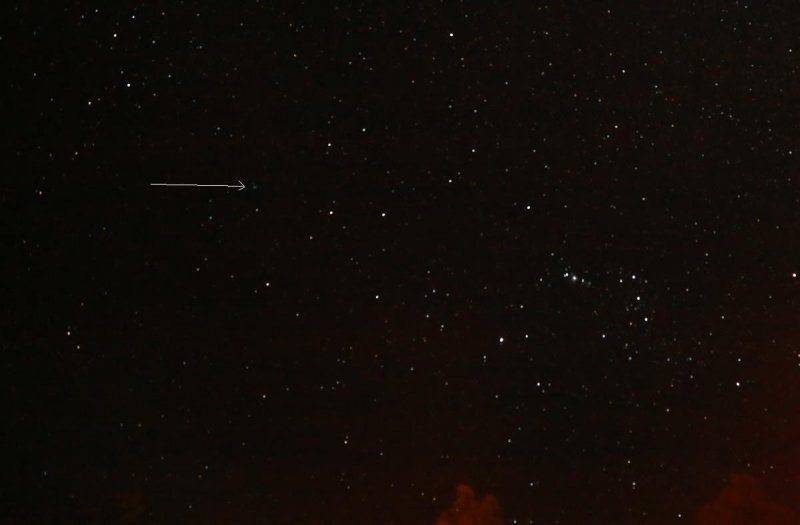
Orion - photo1.JPG


screen dump from Stellarium showing no star in that position
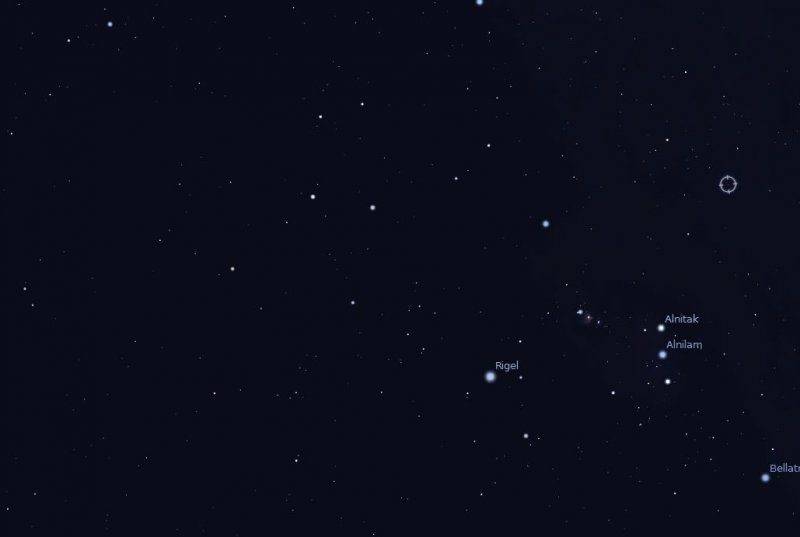
Orion - Stellarium.JPG


comet location map showing correct location for the 29th
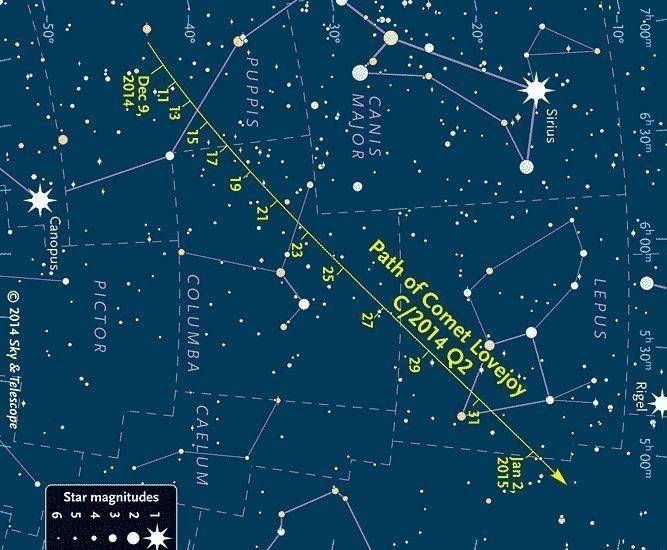
comet path.jpg


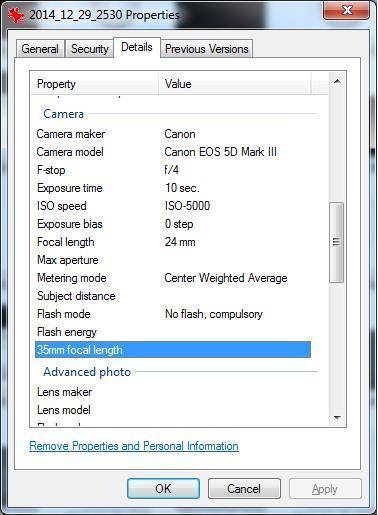
my camera settings
camera settings.JPG
cheers
Dave
 
Astronomy news on Phys.org
another showing it a little easier

Orion - photo3.JPG
not too bad for 24mm and 10 sec exposure :)
 
  • Like
Likes   Reactions: Andy Resnick
OK just done a quick and nasty pic tonite ( 3rd Jan) very bright moon to contend with :(

2015_01_03_2636sm1.JPG

camera data.JPG
 
Nice. I'll have to try to find it if the skies clear up.
 
just got to wait a few days for the moon to wane and move out of the region of the comet
Full moon was 5 Jan

Dave
 
OK time for an update
the moon has past full by a couple of days and is now much lower in the east
still using the Canon 5D3 and 70-200mm, f2.8, IS II lens

first image has the comet in the upper left and the Orion Nebula, M42 in the lower right
88mm, f2.8, ISO 1000, 10 sec exp

2015_01_07_2700b.jpg


second image is 150mm, f2.8, ISO 1000, 15 sec exp

2015_01_07_2708b.jpg


give another couple of nights and the moon is not going to be a problem
I may head out to a darker site away from the horrid city lights and do some more pix with
telephoto and with telescope

cheers
Dave
 
From today's edition of Spaceweather.com:

MAGNETIC STORM ON COMET LOVEJOY:
Around the world, observers of bright Comet Lovejoy (C/2014 Q2) are reporting activity in the comet's sinuous blue ion tail. On Feb. 13th, Michael Jäger of Dorfstetten Austriao used a backyard telescope to capture this 'plasma blob' billowing down the tail, away from the comet's core:

lovejoy_strip.jpg


This could be a sign that a magnetic storm in underway. Observers of comets frequently witness plasma blobs and 'disconnection events' in response to CMEs and gusts of solar wind. In extreme cases, a comet's tail can be completely torn off.

The underlying physics is akin to terrestrial geomagnetic storms. When magnetic fields around a comet bump into oppositely-directed magnetic fields in a CME, those fields can link together or "reconnect." The resulting burst of magnetic energy can make waves, blobs, or even ruptures in the comet's tail. When CMEs hit Earth, a similar process takes place in the planet's magnetosphere powering, among other things, the aurora borealis.

Readers who wish to monitor the effects of space weather on Lovejoy should look toward the constellation Andromeda high in the northern sky after sunset: http://www.skyandtelescope.com/astronomy-news/observing-news/comet-lovejoy-shines/. The comet is shining like a 5th magnitude star, barely visible to the unaided eye from dark-sky locations, but an easy target for telescopes and binoculars. For pinpoint guidance of optics, use this ephemeris from the Minor Planet Center.
 
  • Like
Likes   Reactions: davenn
NIce one :smile:

Sometimes "knots/lumps" like that in the tail are also caused by large clumps of material
coming off the nucleus

Its long gone from our skies 2 - 3 weeks ago :frown:
just look forward to the next reasonably bright one

Dave
 
Last edited:
  • Like
Likes   Reactions: Dotini

Similar threads

  • · Replies 4 ·
Replies
4
Views
2K