Universe's First Stars Interaction with Dark Matter

Click For Summary
SUMMARY

The discussion centers on the interaction between baryonic matter and dark matter, particularly in the context of the universe's first stars, which emerged approximately 180 million years after the Big Bang. The table detector mentioned has shown sufficient accuracy to warrant further improvements, as indicated in the technical paper that highlights dark matter's unique thermal properties. It is established that dark matter primarily interacts gravitationally with baryons, leading to its cooling in the early universe. The conversation also explores the theoretical implications of dark matter potentially being a foundational element of the universe, rather than merely a supporting structure for baryonic matter.

PREREQUISITES
  • Understanding of dark matter theories and properties
  • Familiarity with baryonic matter and its role in cosmology
  • Knowledge of the Big Bang and cosmic evolution
  • Basic grasp of observational cosmology and its methodologies
NEXT STEPS
  • Research "dark matter interactions and baryonic matter" for deeper insights
  • Study "Big Bang nucleosynthesis" to understand early universe conditions
  • Explore "cosmic microwave background (CMB) observations" and their implications
  • Investigate "theoretical models of dark matter" including hidden sector theories
USEFUL FOR

Astronomers, cosmologists, and theoretical physicists interested in the fundamental interactions between dark matter and baryonic matter, as well as those exploring the implications of early universe conditions on cosmic evolution.

bluecap
Messages
395
Reaction score
13
https://www.space.com/39837-first-stars-universe-fingerprints-dark-matter.html

http://www.nature.com/articles/nature25791.epdf?referrer_access_token=L6PHf4qi1jrWUOM-MYXgXtRgN0jAjWel9jnR3ZoTv0Pxjy4puk3sS91mtRutT-5oRg5bNJRASZ37GVS5rctuSuaATALT0lf9IJVXE1qOiMZdZe-NKxO-zYqYkEJ7N7MSRUGceahaslNK0jX2UTmsKTnS8oFQO3tbTi89sgpoC0W8XhBjyd1k6eXn73DqbL77-adKIudcv2bT3ejpJOLJg6oisT-ujjvLz47VmX79WVw=&tracking_referrer=www.cbc.ca

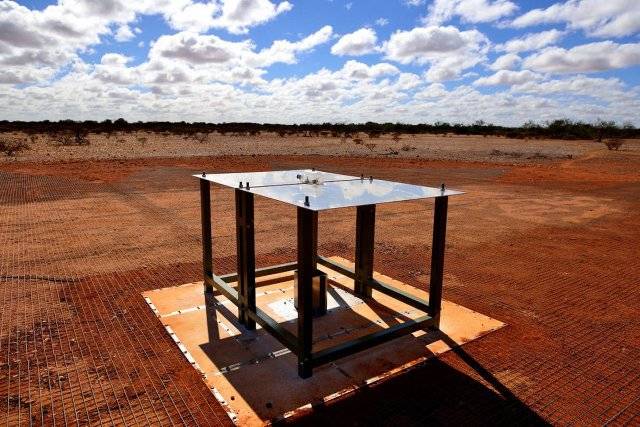
How accurate is this table detector that allegedly detected signal of first stars 180 million years after Big Bang? What possible errors can you think of? I'm basically interested in how our baryonic matter interacts with dark matter and whether there is possibility these two are like protons and electrons that made up a higher basic matter (think up normal baryonic matter with hidden sector that acts like dark matter).
XVJ2M3.jpg
 

Attachments

  • XVJ2M3.jpg
    XVJ2M3.jpg
    61 KB · Views: 527
Space news on Phys.org
bluecap said:
How accurate is this table detector
Accurate enough to suggest that an improved version would be a good idea.
 
In the second technical paper above. It says "The only known cosmic constituent that can be colder than the early cosmic gas is dark matter. The reason for this is that dark matter is assumed to interact with itself and with baryons mainly gravitationally, and so it is expected to decouple thermally in the very early Universe and cool down thereafter (very quickly if it is non-relativistic early on, as in the case of cold dark matter). Substantial electrodynamic or nuclear interactions of dark matter would be inconsistent with the observational successes of standard cosmology, including Big Bang nucleosynthesis, CMB observations and the formation and distribution of galaxies. However, weak, non-gravitational interactions are possible."

It's like dark matter is there only to support the scaffolding of our visible baryonic universe. Is there no possibility it's the other way around.. that our universe is secondary to the dark matter evolution? Any references along this line?
 

Similar threads

  • · Replies 9 ·
Replies
9
Views
2K
  • · Replies 12 ·
Replies
12
Views
3K
  • Featured
  • · Replies 10 ·
Replies
10
Views
5K
  • · Replies 20 ·
Replies
20
Views
3K
  • · Replies 10 ·
Replies
10
Views
2K
  • · Replies 3 ·
Replies
3
Views
3K
  • · Replies 10 ·
Replies
10
Views
2K
  • · Replies 11 ·
Replies
11
Views
3K
  • · Replies 38 ·
2
Replies
38
Views
7K
  • · Replies 9 ·
Replies
9
Views
2K