Vibration: Transmissibility ratio sign change when damping is equal to zero

Join the discussion
Registration is free. Ask a follow-up in this thread, or start your own.
4 replies · 3K views
Pipsqueakalchemist
Messages
141
Reaction score
20
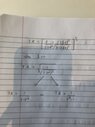
So for the transmissibility ratio equation, after doing a lot of questions when damping is zero and I have to take the square root of the denominator. Some questions take the positive root (1-r^2) while for other questions the solution takes the negative root (r^2-1). Can someone explain when we take the positive or negative root please and thank you
 
Attachments
  • 6432EE0F-4355-4F33-B274-615223E5F9D0.jpeg
    6432EE0F-4355-4F33-B274-615223E5F9D0.jpeg
    30.5 KB · Views: 228
Physics news on Phys.org
The T.R. is a ratio of force magnitudes and is generally taken as a positive value. So the negative root is taken when r>1.
 
It looks like Pipsqueak is no longer with us... Nevertheless, r in the above equation is the ratio between natural frequency and excitation frequency (ω/ωn). It's a measure of how close the driving frequency is to the resonant frequency, and doesn't provide any explicit information on the damping.
 
onatirec said:
It looks like Pipsqueak is no longer with us... Nevertheless, r in the above equation is the ratio between natural frequency and excitation frequency (ω/ωn). It's a measure of how close the driving frequency is to the resonant frequency, and doesn't provide any explicit information on the damping.
Yea I stopped caring about that class so it’s whatever