Science Advisor
Gold Member
- 2,858
- 12,751
The western false asphodel (Triantha occidentalis) has been shown to be carnivorous, but only on the stem of it's flower (so only in flowering season).
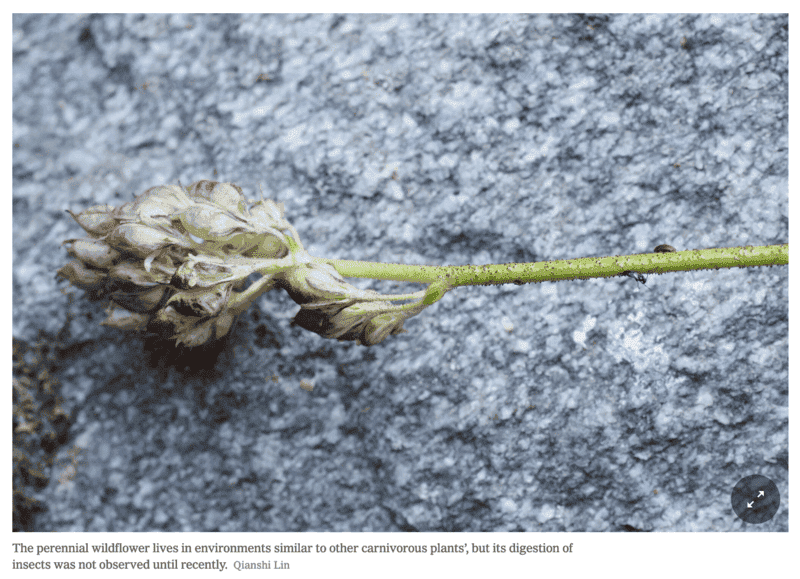
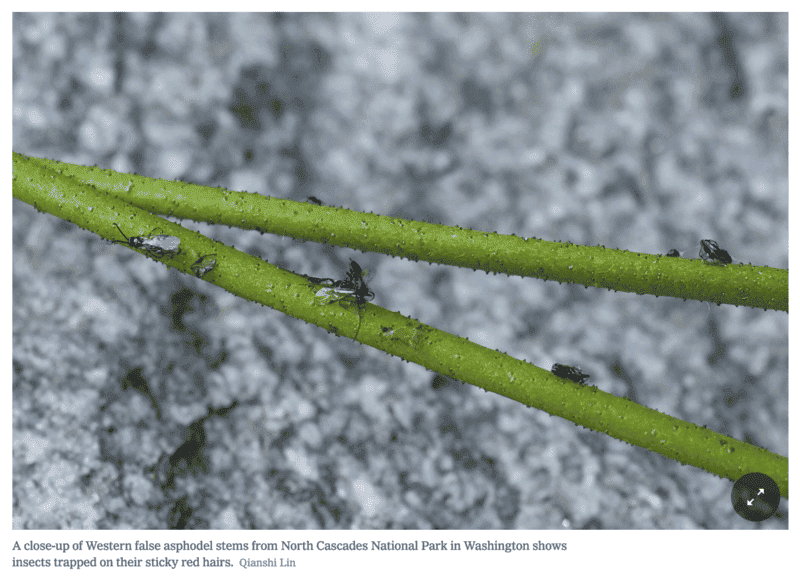
Insects get stuck on sticky little threads on the flower stem and then get digested there (kind of like a sundew plants does).
News article from Science.
NY Times article.
One of the articles also mentioned the genus Philcoxia, another kind of carnivorous plant I had not heard of. It grows underground leaves to gather very small soil nematodes.
In all cases, the plants do this to get nitrogen, which they can not get from the soils in which they grow.
Insects get stuck on sticky little threads on the flower stem and then get digested there (kind of like a sundew plants does).
News article from Science.
NY Times article.
One of the articles also mentioned the genus Philcoxia, another kind of carnivorous plant I had not heard of. It grows underground leaves to gather very small soil nematodes.
In all cases, the plants do this to get nitrogen, which they can not get from the soils in which they grow.
Last edited: