Discussion Overview
The discussion revolves around finding the four roots of the equation $(x-3)^4+(x-5)^4+8=0$. Participants explore the nature of the roots, particularly whether they are real or non-real, and engage in a dialogue about the implications of the equation's structure.
Discussion Character
- Debate/contested
- Mathematical reasoning
Main Points Raised
- Some participants assert that there are no real roots since each term in the equation is nonnegative, leading to the conclusion that the sum cannot equal zero.
- Others suggest that the question implies a search for non-real solutions, despite the original post not specifying this explicitly.
- One participant provides a transformation of the equation, leading to a polynomial that suggests four complex roots, specifically $4+i$, $4-i$, $4+i\sqrt{5}$, and $4-i\sqrt{5}$.
- Another participant humorously notes the ambiguity in the question, mentioning that the roots could theoretically include quaternions, though they agree that complex roots suffice.
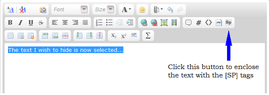
- There is a discussion about how to format solutions in replies, with participants sharing methods for using spoiler tags to hide answers.
Areas of Agreement / Disagreement
Participants generally agree that there are no real roots, but there is disagreement regarding the nature of the roots sought (real vs. non-real), and the discussion remains unresolved regarding the expectations of the original question.
Contextual Notes
The discussion highlights the ambiguity in the phrasing of the original question, which does not specify the nature of the roots, leading to varied interpretations among participants.