Well done - having gone through that, you should be able to see which one of your original answers was incorrect :)
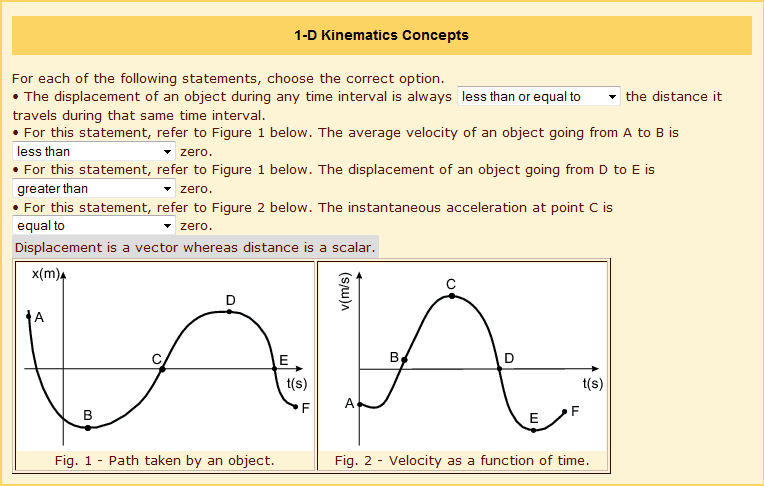
Notice that from C to E on the v-t graph, the object starts out moving to the right (+x direction) quite fast, is slowing at a near-constant rate as it approaches D where it changes direction and picks up speed, to the left this time, at the same rate as it was losing speed before.
That's the last bit where people tend to trip up.
Practice drawing then as they will help you out later.
The main lesson I want to draw out for you is this: don't be scared of being wrong.
Nobody likes exposing their thoughts/reasoning to strangers - what if they are silly and they make us feel bad?
If I had just replied directly to your question, the deeper misunderstandings would not have come to the surface and you'd end up confused even more.
By risking being wrong you got to (a) solve your problem yourself, and (b) see how much of what you were doing was actually correct after all.
The reward is usually worth the risk - especially in science where everyone is wrong almost all the time anyway :)