Discussion Overview
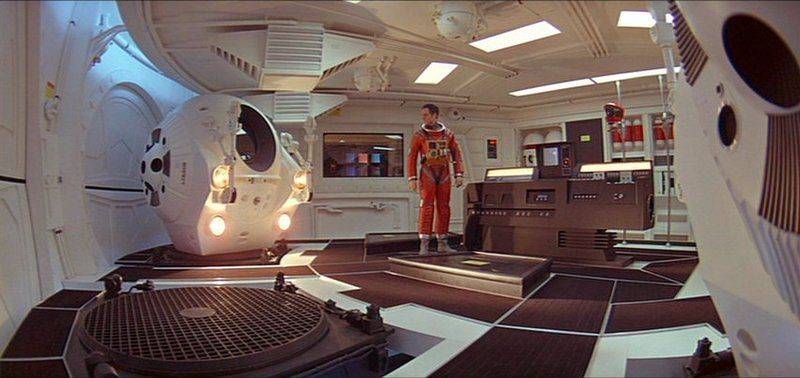
The discussion revolves around the design and functionality of the airlock system on the Discovery ship in the film "2001: A Space Odyssey." Participants explore whether the presence of an airlock is a design flaw or a necessary feature, considering its implications for air management and access to the pod bay. The conversation touches on aspects of film design, practical engineering, and the portrayal of space environments.
Discussion Character
- Debate/contested
- Conceptual clarification
- Exploratory
Main Points Raised
- Some participants question whether the airlock is a mistake, particularly regarding how air is managed when pod doors open directly into space.
- Others argue that an airlock is necessary to avoid wasting air and resources during crew excursions, suggesting that a smaller airlock is more efficient than evacuating the entire pod bay.
- There are differing views on the size and utility of the airlock, with some suggesting that each pod could have its own airlock, while others highlight the impracticality of maintenance and space constraints.
- Some participants express confusion over the design choices, noting that expansive rooms in films often serve cinematic purposes rather than practical ones.
- A few comments reflect on the historical context of film set design, suggesting that practical considerations in filmmaking can lead to less realistic portrayals of space environments.
Areas of Agreement / Disagreement
Participants generally agree that the airlock is not a mistake, but there is no consensus on its design efficacy or necessity. Multiple competing views remain regarding the practicality and functionality of the airlock system.
Contextual Notes
Participants acknowledge that assessing the design of the airlock requires understanding all underlying requirements and constraints, which are not fully explored in the discussion. There are also references to the limitations of cinematic portrayals of space and engineering.