Why is ln(x) Important in Mathematical Formulas?

  • Context: Undergrad 
  • Thread starter Thread starter Newtons Apple
  • Start date Start date
  • Tags Tags
    Formulas
Click For Summary

Discussion Overview

The discussion revolves around the significance of the natural logarithm function, ln(x), particularly in relation to the mathematical constant e. Participants explore its applications in various contexts, including the rocket equation and concepts of exponential growth, while questioning the underlying reasons for its use in these scenarios.

Discussion Character

  • Exploratory
  • Technical explanation
  • Conceptual clarification
  • Debate/contested

Main Points Raised

  • Some participants inquire about the specific role of ln and the base e in mathematical formulas, particularly in the context of motion and fuel consumption in rockets.
  • One participant explains that the rocket equation arises from solving a differential equation based on conservation of momentum, with its solution expressed in terms of the natural logarithm.
  • Another participant discusses the concept of exponential growth, suggesting that the change in a quantity is proportional to the quantity itself, which is mathematically represented by the exponential function and its inverse, the logarithm.
  • A participant attempts to clarify their understanding of the relationship between initial and final mass using ln, questioning the significance of the resulting value.
  • Some participants suggest that the natural log provides a measure of time needed to reach a certain growth level, proposing that e represents a common rate for continually growing systems.
  • Concerns are raised about the vagueness of some explanations regarding continuous growth, with one participant asserting that the natural log's definition as the inverse of e^x is not intuitively clear.

Areas of Agreement / Disagreement

Participants express various viewpoints regarding the importance and interpretation of ln and e, with no clear consensus reached on the significance of these concepts in different contexts. Some agree on the mathematical properties of e and its applications, while others challenge the clarity and rigor of explanations provided.

Contextual Notes

There are unresolved questions regarding the intuitive understanding of ln and its applications, as well as the implications of using different logarithmic bases. Participants also highlight the potential for different interpretations of continuous growth beyond exponential models.

Newtons Apple
Messages
73
Reaction score
1
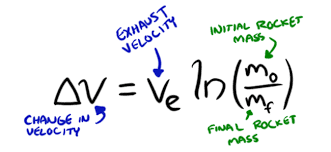
Hey folks...Ok so I have another question related to e and it's use in the natural log function, ln. I notice that the function ln() is used in things like the rocket equation, describing velocity of an object as it moves and uses fuel etc.. But glossing over that I'm just more curious as to why ln and more specifically it's 'e' base, is being used. Why does the value of e specicfically here apply? Furthermore why is ln at all being applied here? My overall question is..I get the value of 'e' for things like compounding interest...but when it comes to things like motion and other area's I don't see how it applies? What is it that ln will provide here? what if you used a different log ?
images?q=tbn:ANd9GcRDeq3CzmU4Q8xq-GxjqZCznTd8U3J6GybOv7xujzhTFDWd5H_-5Q.png


Thanks for any hints guys.. I'm just curious as to what ln is doing here and what the point of it is... Again I get that it's the natural log, and that it's base is 'e'. So it gets the value of, what number do you raise 'e' to, to get initial mass divided by final mass...but what is that important?
 

Attachments

  • Screenshot - 1_2_2019 , 2_46_12 AM.jpg
    Screenshot - 1_2_2019 , 2_46_12 AM.jpg
    9 KB · Views: 476
  • images?q=tbn:ANd9GcRDeq3CzmU4Q8xq-GxjqZCznTd8U3J6GybOv7xujzhTFDWd5H_-5Q.png
    images?q=tbn:ANd9GcRDeq3CzmU4Q8xq-GxjqZCznTd8U3J6GybOv7xujzhTFDWd5H_-5Q.png
    5.9 KB · Views: 621
Physics news on Phys.org
The rocket equation results from solving a differential equation. This differential equation is based on conservation of momentum and in the linit of infinitesimally small packages of exhaust. Its solution is in terms of the natural logarithm.

In the end, it all boils down to ##e^x## being its own derivative.
 
In a lot of processes, the change in a quantity is proportional to the quantity itself. Think e.g. about the probability that you wreck your dearly-beloved China of your mother-in-law: the more se has of it, the higher the probability you drop one of her plates during doing the dishes. Or think about populations: the more humans we have, the more interactions there can be, and the more reproduction we will have. Up to a certain limit in reality, of course.

So that's what we call "exponential growth": the change of a quantity is proportional to the quantity itself. Mathematically, the function which satisfies this property is the exponential function (hence the name). It's inverse is the logarithm.
 
Thanks for the replies everyone! I really appreciate it.. I'm only part way through calculus I so some of this is indeed a bit lost on me... but let me try to rephrase what you're saying...and you tell me if I have it right...

So..
ln m0/mf

We find what the number e needs to be raised to, to get:

m0/mf

So if we have

m0 = 400 and m0/mf = 100 ...

We get ln(4) which is : 1.39... So

e1.39 correct?

But..what am I looking at here? What value does this have? What is this e1.39 telling us?
 
Newtons Apple said:
But..what am I looking at here? What value does this have? What is this e1.39 telling us?
Nothing. In the end it is a matter of scaling, same as units are. But if we agree on natural units like ##c=\hbar=G=1## we should as well consider ##y(0)=1## as natural condition. It makes sense, since differentiation is the process of locally turning something multiplicative (##1##) into something additive (##0##). Other conditions which result in a different base, i.e. scaling factors ##\log b## are far more artificial - same as 300,000 km/s is.
 
Thanks for the answers but I think I found the answer more akin to what I was looking for:

There’s a fresh, intuitive explanation: The natural log gives you the time needed to reach a certain level of growth.

as well as;

So e is not an obscure, seemingly random number. e represents the idea that all continually growing systems are scaled versions of a common rate.

https://betterexplained.com/articles/demystifying-the-natural-logarithm-ln/
 
Last edited:
Newtons Apple said:
Thanks for the answers but I think I found the answer more akin to what I was looking for:

There’s a fresh, intuitive explanation: The natural log gives you the time needed to reach a certain level of growth.

as well as;

So e is not an obscure, seemingly random number. e represents the idea that all continually growing systems are scaled versions of a common rate.

https://betterexplained.com/articles/demystifying-the-natural-logarithm-ln/

This link is not rigorous. The idea it gives of continuous growth is vague. Things can grow continuously in many ways not only exponentially. Post #4 gives the right answer.

The link you gave says

"Given how the natural log is described in math books, there’s little “natural” about it: it’s defined as the inverse of e^x, a strange enough exponent already."

The author then goes on to show that the log is the inverse of the exponential.
 
Last edited:

Similar threads

  • · Replies 9 ·
Replies
9
Views
2K
  • · Replies 14 ·
Replies
14
Views
2K
  • · Replies 3 ·
Replies
3
Views
2K
  • · Replies 4 ·
Replies
4
Views
2K
Replies
5
Views
2K
  • · Replies 3 ·
Replies
3
Views
3K
  • · Replies 5 ·
Replies
5
Views
2K
  • · Replies 3 ·
Replies
3
Views
982
  • · Replies 3 ·
Replies
3
Views
2K
  • · Replies 3 ·
Replies
3
Views
2K