davidpeng1749
- 1
- 0
How did you find PF?: gmail
The regular double-slit experiment is the "the basic Mystery" in quantum (Feynman).

now I have done several cross-double-slit experiments with different configurations,

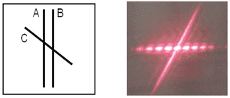
My question is: how photons “sense”: (1) which slit they pass through; (2) what photons they will interferewith, then to create interference pattern accordingly. When the experiments are performed with single photon, it is much hard to interpret.
for more observation of experiments, please see:
Observations of Cross-Double-Slit Experiments by Hui Peng
International Journal of Physics. 2020, 8(2), 39-41. DOI: 10.12691/ijp-8-2-1
The regular double-slit experiment is the "the basic Mystery" in quantum (Feynman).
now I have done several cross-double-slit experiments with different configurations,
My question is: how photons “sense”: (1) which slit they pass through; (2) what photons they will interferewith, then to create interference pattern accordingly. When the experiments are performed with single photon, it is much hard to interpret.
for more observation of experiments, please see:
Observations of Cross-Double-Slit Experiments by Hui Peng
International Journal of Physics. 2020, 8(2), 39-41. DOI: 10.12691/ijp-8-2-1
Attachments