Discussion Overview
The discussion revolves around the acidity and basicity of various compounds, including amides, ketones, aldehydes, and ethers, particularly in the context of their behavior in water. Participants explore the factors that influence whether these compounds act as acids or bases, focusing on the relationship between their pKa/pKb values and those of water.
Discussion Character
- Exploratory
- Technical explanation
- Debate/contested
Main Points Raised
- Some participants suggest that the behavior of compounds like amides and ketones as neither acids nor bases in water may depend on their pKa/pKb values relative to those of water.
- Others argue that compounds can be inert in acid/base reactions regardless of their theoretical ability to act as acids or bases.
- It is noted that ketones are considerably weaker bases than water, which may explain their lack of effect on pH.
- Participants discuss that while amides can theoretically act as both acids and bases, in practice they do not significantly alter pH in aqueous solutions.
- One participant proposes that an aqueous solution of an amide could be basic due to the potential for water to donate protons to the nitrogen in amides.
- Another participant clarifies that an aqueous solution of an amide's salt would be strongly basic and would hydrolyze completely, contrasting with the behavior of neutral amides.
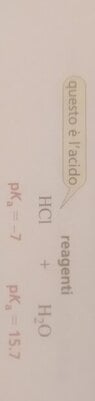
- There is a discussion about the pKa values of amides and water, with some participants asserting that water behaves as an acid in reactions involving amides.
- Concerns are raised about the appropriateness of comparing pKa values across different reactions to determine acid/base behavior.
Areas of Agreement / Disagreement
Participants express a range of views on the acidity and basicity of the discussed compounds, with no clear consensus reached. Some agree on specific points regarding pKa values and the behavior of amides, while others present alternative interpretations and examples.
Contextual Notes
Limitations include the potential for misunderstanding the implications of pKa comparisons and the specific conditions under which these compounds are evaluated. The discussion also highlights the complexity of acid/base equilibria and the role of solvent interactions.