- 2,739
- 11,966
- TL;DR
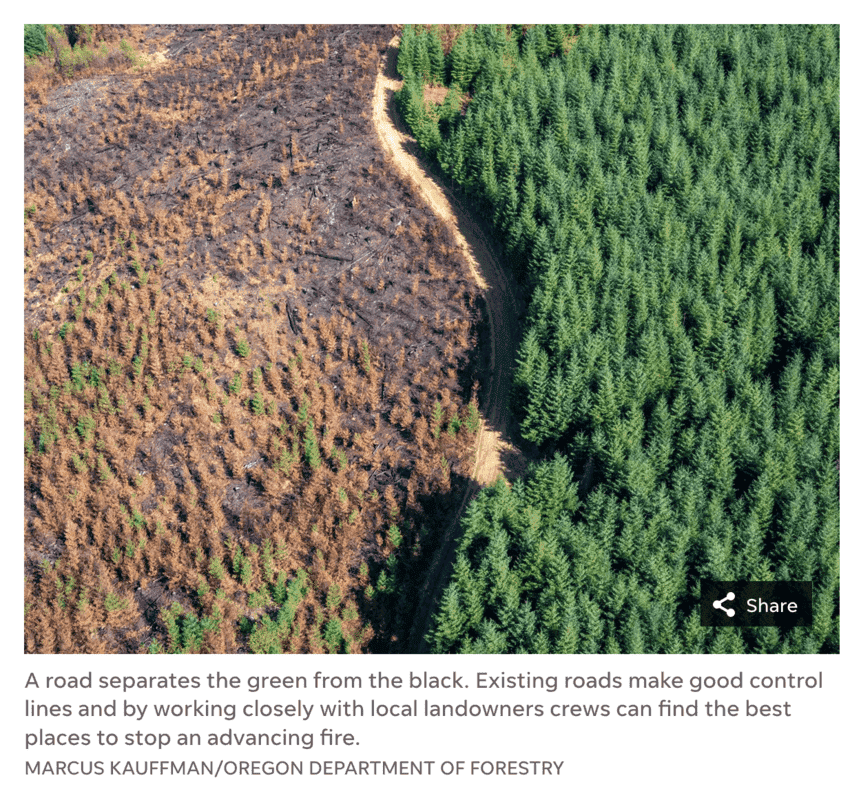
- These pictures are from a flyover of different affected by the Holiday Farm Fire, near Eugene, where I live. They show the patchy effects of the fire, in some areas. They also show how different features in the land affect spread of the fire and the kinds of features that get used as fire breaks in what kind of terrain.
This article (open access I believe) from the local newspaper (The Register-Guard) has several aerial pictures of the landscape, in areas burned by the Holiday Farm Fire (~30 miles from Eugene, where I live).
It shows a patchy distribution of burned areas. This is probably good, in that unburned areas at the edges of the fire of vegetation will be able to seed neighboring areas (with locally adapted seeds too).
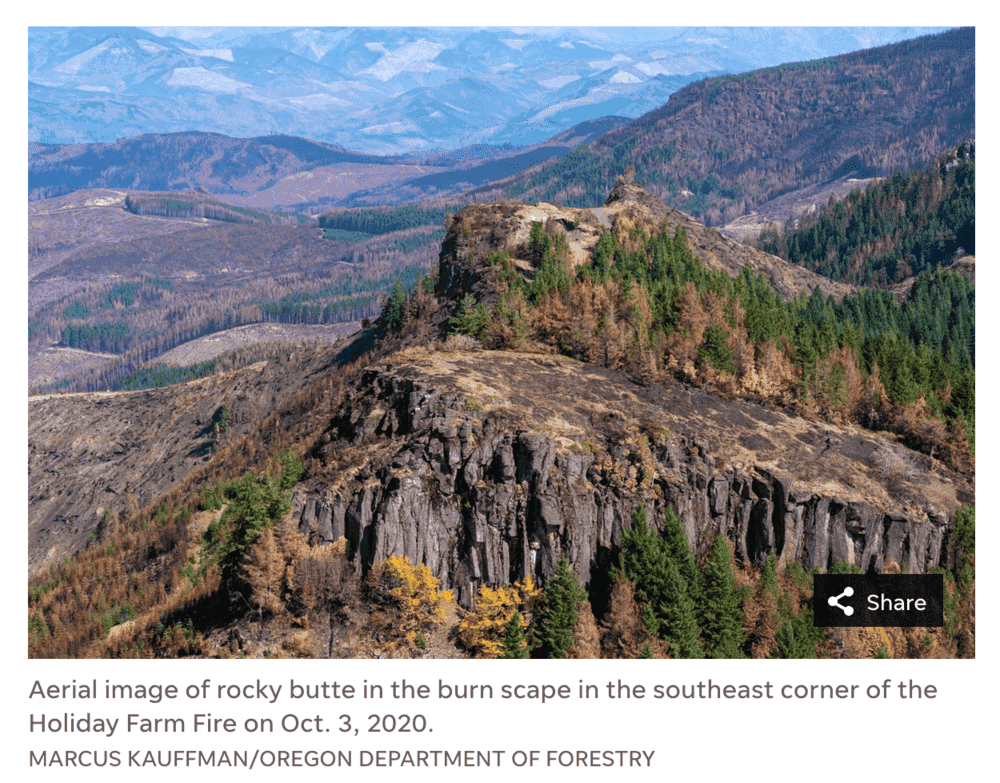
The fire's spread is affected by several features of terrain. Going up hill is easy through stands of fir trees with interlocking branches. Burning through the organics in the ground spreads more slowly.
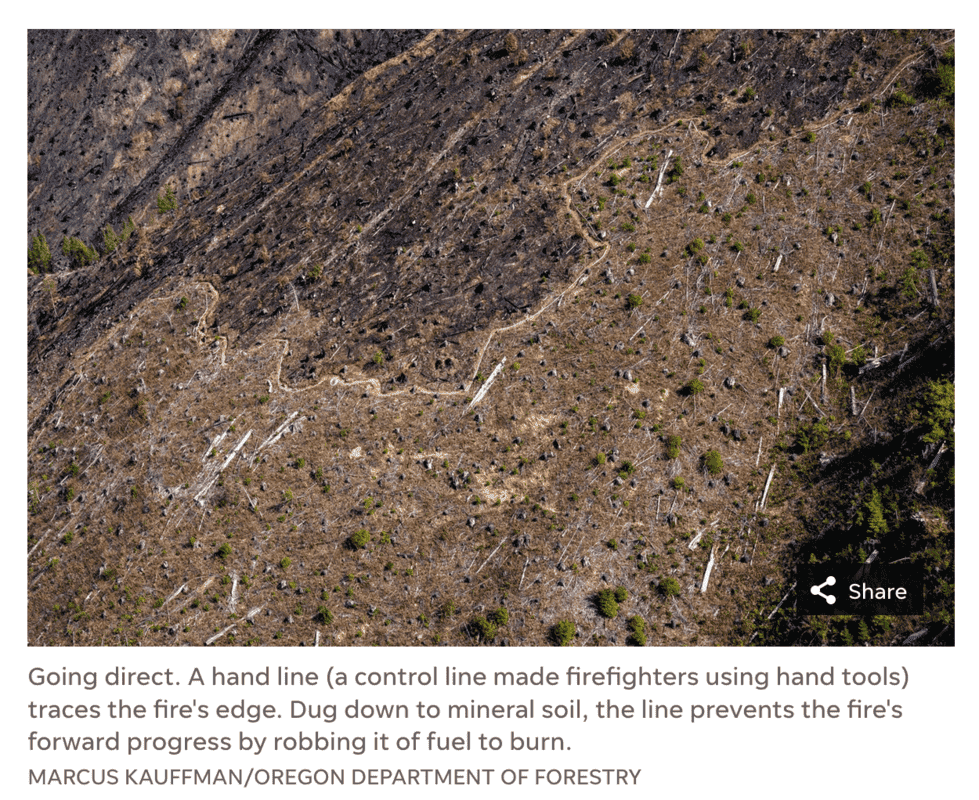
Fire breaks should have different effectivenesses, depending on the conditions, like weather (rain/no rain, windy/not windy, temperature/dryness).
Rivers and roads and other features can act as fire breaks or be built upon to make more effective breaks.
It shows a patchy distribution of burned areas. This is probably good, in that unburned areas at the edges of the fire of vegetation will be able to seed neighboring areas (with locally adapted seeds too).
The fire's spread is affected by several features of terrain. Going up hill is easy through stands of fir trees with interlocking branches. Burning through the organics in the ground spreads more slowly.
Fire breaks should have different effectivenesses, depending on the conditions, like weather (rain/no rain, windy/not windy, temperature/dryness).
Rivers and roads and other features can act as fire breaks or be built upon to make more effective breaks.