Monoxdifly
MHB
- 288
- 0
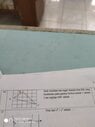
The area of a triangle with non-intersecting vertices can be calculated by enclosing it within a tight rectangle. The area of the triangle is determined by subtracting the areas of the three right triangles formed outside the triangle from the area of the rectangle. This method is particularly useful when the triangle's vertices do not align with grid lines, necessitating the use of help lines to accurately estimate side lengths and areas. This approach is suitable for Elementary Students Math Olympiads.
PREREQUISITESElementary educators, math tutors, students preparing for Math Olympiads, and anyone interested in geometric problem-solving techniques.