Bacteria, mold and household water

  • Thread starter Thread starter DaveC426913
  • Start date Start date
  • Tags Tags
    Bacteria Water
Click For Summary

Discussion Overview

The discussion revolves around the presence of an ink-like black substance found inside a kitchen faucet in an old house, with participants exploring its potential causes, implications for health, and the nature of the water supply.

Discussion Character

  • Exploratory
  • Technical explanation
  • Debate/contested

Main Points Raised

  • One participant describes finding a black, ink-like substance inside their faucet, suggesting it may be manganese deposits from water and bacteria.
  • Another participant recommends testing the water, questioning whether the water source is a well or a public system.
  • A third participant cites a state health document regarding manganese in water, indicating that lab testing is necessary for confirmation.
  • Some participants propose that the substance could be manganese slime or deposits, with one suggesting it is not harmful and tends to clump together.
  • Another participant notes that finely divided metals and their oxides can appear black, suggesting it could also be iron or copper.
  • One participant speculates that the substance might be lubricants used in plumbing installations rather than mold, advocating for testing to ensure safety.
  • A later reply mentions the possibility of the gasket between the pipe and aerator disintegrating as a source of the substance.

Areas of Agreement / Disagreement

Participants express a range of hypotheses regarding the nature of the black substance, with no consensus on its exact composition or health implications. Some suggest it may be harmless, while others emphasize the need for testing.

Contextual Notes

Participants reference the age of the house and the plumbing materials, which may influence the presence of various substances. There is uncertainty regarding the water source and the potential health risks associated with the findings.

Who May Find This Useful

Homeowners with older plumbing systems, individuals concerned about water quality, and those interested in the effects of minerals and bacteria in household water supplies may find this discussion relevant.

DaveC426913
Gold Member
2025 Award
Messages
24,318
Reaction score
8,509
TL;DR
What is this black inky stuff in my kitchen tap?
I live in a house that's 91 years old. I had the pipes replaced with copper a few decades ago, but its still an old house.

Occasionally, I have to unscrew the aerator on the kitchen faucet and shake out the mineral grains. They're always red (pres. iron oxide).
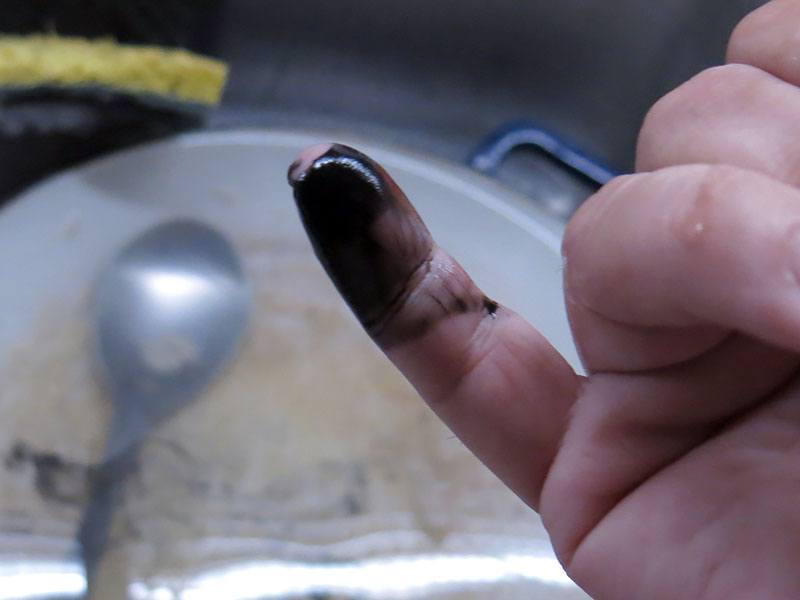
This time, I wiped my finger inside the faucet itself, expecting a few more particles, but was astounded to find it lined with this ink-like substance.
IMG_7354.jpg


Pitch black. Not slimy or gritty. Exact consistency of India ink.

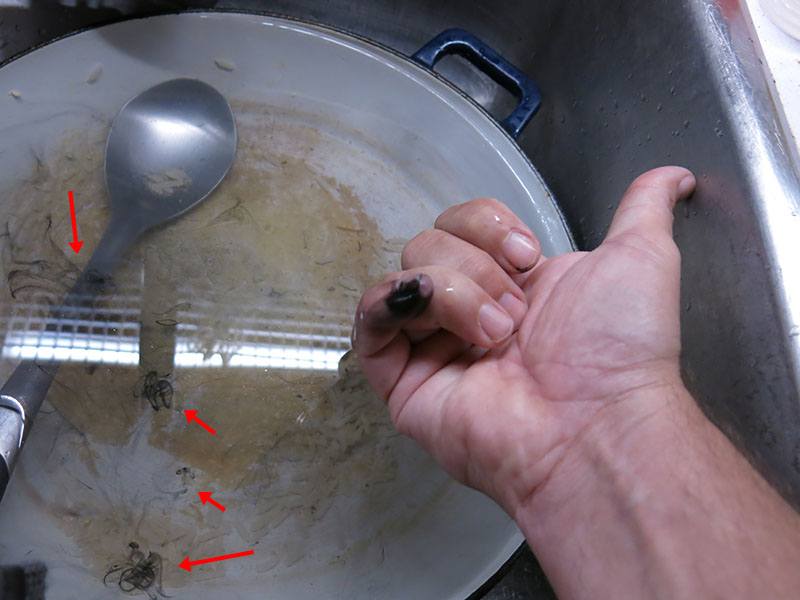
Very soluble. You can see here when it drips into standing water, how easily it diffuses:
IMG_7359.jpg

It's also very saturated with "pigment". These few drops were enough to turn the whole pan of water a sullen grey.

A little reading suggests this is manganese deposits from the water and bacteria living on the manganese. Looking for confirmation.And this is perfectly harmless?? I don't see how this isn't getting into everything we eat and drink.
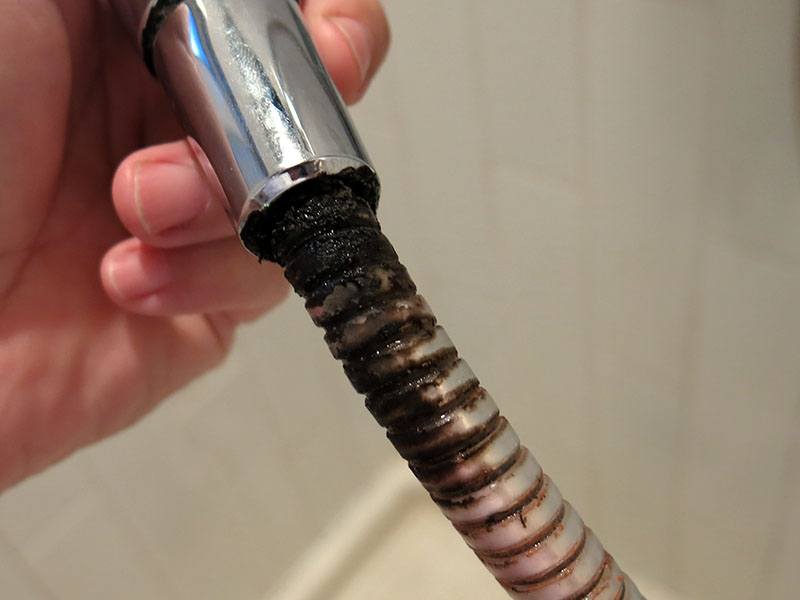
(I have a drinking filter in the fridge.)That made me think about the black stuff I find in the shower stall where it doesn't get cleaned properly.

I'd always thought this was dangerous "black mold".
IMG_7360.jpg
 
Chemistry news on Phys.org
Are you on a well or public water system? Well water tests are not expensive and are a good idea every few years.
 
Probably a manganese slime. If it weren’t so smooth, I’d say just manganese deposits. They’re having fun! Not harmful. Sure, some of it’s getting into your water, but they tend to clump together and stay on the linings. Is this well water?
 
Fervent Freyja said:
Is this well water?
No. This is Toronto.
 
  • Like
Likes   Reactions: Fervent Freyja
All finely divided metals and many of their oxides look black like that. Could be iron or copper.
 
Living in an old house can come with its quirks, right? Those ink-like substances you found inside the faucet might not necessarily be mold. It's possible that they're lubricants used in plumbing installations. However, to be on the safe side, it's a good idea to do some testing just to rule out any potential issues.
 
  • Like
Likes   Reactions: russ_watters
This thread is almost 3 years old....

I've seen this: it's the gasket between the pipe and the aerator disintegrating.
 

Similar threads

  • · Replies 39 ·
2
Replies
39
Views
15K
Replies
72
Views
13K