Behavior of besselfunction for index

  • Context: Graduate 
  • Thread starter Thread starter Fabrice23
  • Start date Start date
  • Tags Tags
    Behavior Index
Click For Summary

Discussion Overview

The discussion revolves around the behavior of the Bessel function of the first kind, specifically Jn(eta), for large values of eta. Participants explore the characteristics of the function, including its oscillatory nature and the conditions under which it exhibits certain behaviors, such as overshooting or decreasing trends.

Discussion Character

  • Exploratory
  • Technical explanation
  • Debate/contested
  • Mathematical reasoning

Main Points Raised

  • Some participants inquire about demonstrating that Jn(eta) produces a "bathtub" effect for large eta, suggesting a potential overshoot.
  • Others argue that J(n,n) does not exhibit an overshoot and is a regular, continuously decreasing function, referencing graphical evidence and external sources.
  • One participant mentions plotting J(n, eta) for large values and observes an increase followed by a rapid decrease, seeking an explanation for this behavior.
  • Concerns are raised about the comparison between BesselJ(n,n) and BesselJ(n, eta) when eta is constant and n varies, highlighting the oscillatory nature of the latter.
  • Another participant questions the maximum value of BesselJ(n, eta)^2 being around eta and seeks a formula to describe the oscillating nature of the Bessel function.
  • Discussion includes a breakdown of the behavior of Jn(x) across different domains, noting oscillation patterns, amplitude changes, and asymptotic behaviors as n increases.
  • Participants reference external literature for deeper insights into the asymptotic behavior of Bessel functions, particularly in transition regions.

Areas of Agreement / Disagreement

Participants express differing views on the existence of overshoots in J(n,n) and the nature of J(n, eta). There is no consensus on the interpretation of the function's behavior, and multiple competing perspectives remain throughout the discussion.

Contextual Notes

Limitations include the complexity of asymptotic formulas in transition regions and the potential for misunderstanding due to the intrinsic properties of Bessel functions. The discussion does not resolve these complexities.

Fabrice23
Messages
3
Reaction score
0
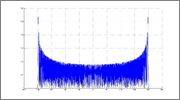
How can I show that a first-degree Besselfunction a la Jn=Bessel(n,eta) for large etas always lead to something like a bathtub?
I.e. how can I show that J(n=eta) produces sth like a overshoot?
I would really appreciate every idea.
untitled.jpg
 
Physics news on Phys.org
Fabrice23 said:
How can I show that a first-degree Besselfunction a la Jn=Bessel(n,eta) for large etas always lead to something like a bathtub?
I.e. how can I show that J(n=eta) produces sth like a overshoot?
I would really appreciate every idea.
untitled.jpg

Sorry, I cannot understand your wording. Do you mean J(n=eta) = J(n,n) ?
If yes, where is no overshoot. The function BesselJ(n,n) is fairly regular.
Also, on your plot, what is drawn as a function of what ?
 

Attachments

  • BesselJnn.JPG
    BesselJnn.JPG
    8.9 KB · Views: 466
Yes, I'mean J(n,n) n-->large (inf) (or take a look at http://literature.agilent.com/litweb/pdf/5954-9130.pdf pic. 23 d)

for large values the besselfunction starts to increase (Jn(n-->eta)) and than plunges rapidly but who can I explain that the values increase?
I plotted J(n,eta=2000) (and n ranged from -2100 to 2100)
 
As I already said in my previous post, the function BesselJ(n,n) is without any overshot. It is a regular function continusely decreassing, without oscillation. See the graph in my previous post. This is confirmed by WolframAlpha :
http://www.wolframalpha.com/input/?i=plot+BesselJ(n,n)+from+n=1000+to+n=5000

Be careful in comparing BesselJ(n,n) and BesselJ(n, eta) if eta is constant and n variable. It is an oscillating function. Look at the example drawn by WolframAlpha :
http://www.wolframalpha.com/input/?i=plot+BesselJ(n,200)+from+n=0+to+n=300
In order to make it more clear, the value of eta is =100. We can see that for n>eta, the function is decreassing and tends to 0 when n tends to infinity. This is consistent with the asymptotic expansion of the BesselJ function.
Moreover, artifacts of ploting are likely to mistaken us. It is strange that your plot shows only positive values. Probably, roughly there are as many negative as positive points.
 
Last edited:
JJacquelin: Actually my plot shows BesselJ(n, eta)^2 , What I don't get, why is the max value of BesselJ(n, eta)^2 rougly around eta?
Is there a way to describe the oscillating nature of the besselfunction because I'm interested in finding values that a 0.8*J0(eta)>Jn(eta)? (at the moment i use a MATLAB script but is there a way do discribe this with a formula that is easy to handle?)
Thanks for you help.
 
Fabrice23 said:
Is there a way to describe the oscillating nature of the besselfunction because I'm interested in finding values that a 0.8*J0(eta)>Jn(eta)? (at the moment i use a MATLAB script but is there a way do discribe this with a formula that is easy to handle?).

Sorry I cannot understand your question :
"Is there a way to describe the oscillating nature of the Bessel function ?"
Suppose that the question was :
"Is there a way to describe the oscillating nature of the sine function?" What could be the answer ?
In both cases I think that the answer should be "It is an intinsic property of the function. The oscillating nature of the sine function (or the Bessel function) is described by the analytic definition of the function".
Certainly I misunderstand the meaning of your question.

What do you mean exactly by " finding values that a 0.8*J0(eta)>Jn(eta) " ? The values of what parameter or what wariable ?
 
Fabrice23 said:
What I don't get, why is the max value of BesselJ(n, eta)^2 rougly around eta?
It is an intrinsic property of the Jn(x) function.
In case of constant and large x, the behaviour of Jn(x) as a function of n is known for a long time. Roughly, three domains are distinguished :

First domain: relatively small n (compared to large x).
Jn(x) is oscillating with amplitude roughly = sqrt(2/(pi*x))

Second domain: The transition.
As n increases, the amplitude of oscillation increases. For n not far from x, the oscillations cease. Then, with n increasing, Jn(x) begins to decrease.
In the transition domain, the asymptotic formulas are very complicated. A good compilation can be found in "Handbook of Mathematical Functions", M.Abramowitz, I.A.Stegun, Dover Publications, N.-Y., 1972, “Bessel functions of integer order", Ch.9, pp.355-389, especially “Asymptotic expansions in the transition region” pp.367-368.
It should be too complicated to deal with it on a forum. For even more explanation about those formulas, it should be necessary to consult some specialized documents listed p.368

Third domain : relatively large n (compared to x)
As n increases, Jn(x) decreases very rapidly. An asymptotic formula is :
Jn(x) roughly = (1/sqrt(2*pi*n))*(e*x/(2*n))^n
This formula is not valid on the transition domain. More accurate formulas can be found in the book referenced above.

The behaviour of the function Jn(n) is different (because representing for each n a particular point in the transition domain). This is a continuously decreasing function. An asymptotic formula is :
Jn(n) roughly=(1/Gamma(2/3))* (2/(9*n))^(1/3)

All above is for positive n.
For negative n, see the book referenced above (especially about oscillations in case of large negative n)
 
Last edited:

Similar threads

  • · Replies 10 ·
Replies
10
Views
2K
Replies
5
Views
498
  • · Replies 8 ·
Replies
8
Views
3K
  • · Replies 30 ·
2
Replies
30
Views
8K
Replies
12
Views
2K
  • · Replies 1 ·
Replies
1
Views
3K
  • · Replies 11 ·
Replies
11
Views
4K
Replies
7
Views
3K
  • · Replies 3 ·
Replies
3
Views
3K
  • · Replies 2 ·
Replies
2
Views
2K