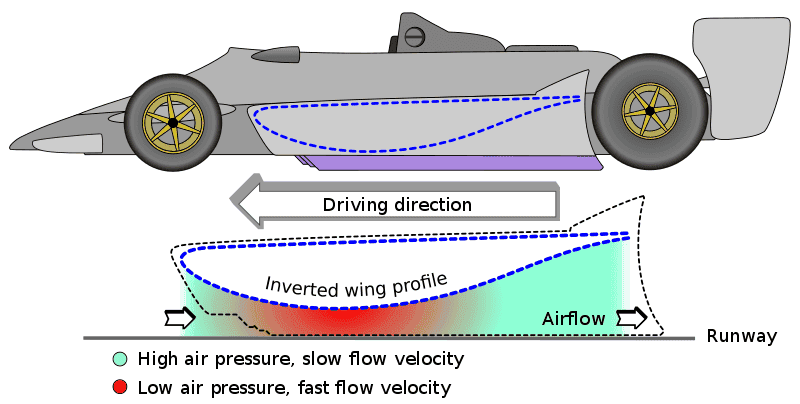
When you find out please do let us know or, better for you, sell the information to the Formula 1 teams. I guarantee you will have so much money you will never need to work another day in your life.
Formula 1 teams spend millions and millions on huge supercomputers, CFD programs and CFD specialists to analyse this very problem so I doubt you will get that much help here. A quick web search found this 2005 paper from Sauber reviewing the problem:
Supercomputing in F1 – Unlocking the Power of CFD. This was their their supercomputer then.
View attachment 275886
As an aside I visited a very competitive F1 team in the 80s (they won a title) and was told the downforce on a single side wing - about 10ft long? x 1ft wide? - was, IIRC, about 800 lbs while the composite structure weighed just a few pounds. Their car would indeed easily run upside down on the ceiling of the Monte Carlo tunnel without falling off.
There was another interesting effect - the downforce bottomed the car onto the suspension mounts with the springs fully compressed. The car then effectively had no suspension so the driver was battered and beaten at every bump. The vertical side wings kept the air from flowing in from the side.
The Brazilian Grand Prix circuit was especially bumpy at the time and, when the car went over a bump, the side wings lost contact with the ground allowing air to leak in and the downforce to fall. The fully compressed springs then immediately threw the car up which increased the venturi throat at the front pulling in much more air which jerked the car down hard.
With downforce, the car oversteered. Without downforce the car understeered.
As the driver was cornering at 160mph or more he was continuously fighting with the car repeatedly going from full oversteer to full understeer and back again in fractions of a second and with him getting thumped every time the suspension bottomed and every time the springs pushed him up.
I was pleased I wasn't an F1 driver.
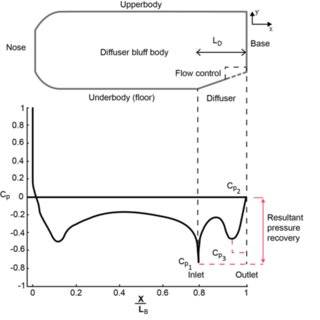 "wing shape"