kunalv
- 29
- 1
Hello, I have borrowed a Freddy Vacuum Cleaning System from a friend since I wanted to use it on my CNC. We used it for removing the floating hydraulic oil from the coolant surface but it also sucks a lot of good coolant.
We then started looking for Freddy videos and found this -
Why have they used what looks like a Compressor Air Muffler in the joint section?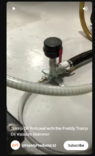
We built a simple U shaped pickup and fixed it to the tank to ensure it only collects oil from the surface, and connected it to the Freddy's vacuum suction hose with a simple tee and plugged the third port of the tee Like this -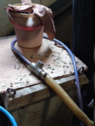
It works fine but I would like to understand why a Muffler would be used in this.
Any help would be great. Thanks.
We then started looking for Freddy videos and found this -
Why have they used what looks like a Compressor Air Muffler in the joint section?
We built a simple U shaped pickup and fixed it to the tank to ensure it only collects oil from the surface, and connected it to the Freddy's vacuum suction hose with a simple tee and plugged the third port of the tee Like this -
It works fine but I would like to understand why a Muffler would be used in this.
Any help would be great. Thanks.