Can closed wing aircraft take off as hydrofoil

  • Thread starter Thread starter Czcibor
  • Start date Start date
  • Tags Tags
    Aircraft Closed
Click For Summary
SUMMARY

This discussion explores the feasibility of designing a closed-wing aircraft that can function as a hydrofoil on a sparsely populated exoplanet with a 3 atm atmosphere. Key design features include high-mounted engines to keep them out of water and low-mounted wings that can act as hydrofoils. The conversation highlights the importance of ensuring that submerged components, such as the hull and sponsons, are robust enough to withstand hydrodynamic forces. Additionally, the reduced density contrast in a 3 atm environment allows for lower takeoff speeds compared to Earth, suggesting that a plane optimized for flight could effectively transition to water takeoff.

PREREQUISITES
  • Understanding of hydrofoil mechanics and design
  • Knowledge of aircraft structural integrity under hydrodynamic forces
  • Familiarity with atmospheric pressure effects on aircraft performance
  • Basic principles of aerodynamics and buoyancy
NEXT STEPS
  • Research the design principles of hydrofoil aircraft
  • Study the structural requirements for aircraft hulls in high-pressure environments
  • Examine the aerodynamic contributions of sponsons in aircraft design
  • Explore the implications of atmospheric density on aircraft takeoff and performance
USEFUL FOR

Aerospace engineers, aircraft designers, and enthusiasts interested in innovative aircraft concepts and hydrofoil technology.

Czcibor
Messages
294
Reaction score
128
Mildly futuristic setting concerning technology, sparsely populated exoplanet with 3 atm. I'm looking for a cool, but very practical plane design.

A photo of design that I thought about (from wikipedia) :
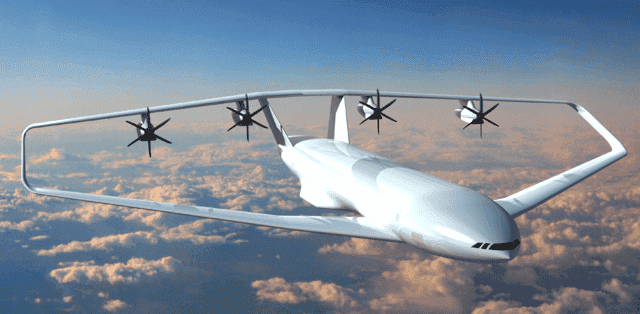
640px-Artistic_view_of_a_PrandtlPlane_freighter.png

(except that I think about a bit smaller ones)

It looks as if such design had two features that made it destined to become a flying boat:
-engines put highly, so would be out of reach of water;
-front part of lowly put wings seem able to act as hydrofoil.

From what I've read modern passenger planes easily stay afloat for a while, but the problem is water slowly seeping inside. Sticking all holes seems feasible.

Could such design be adjusted easily to act as flying boat?

I also thought about twin pressurized hulls to let it act as catamaran. Feasible?
 
Physics news on Phys.org
If the outside pressure is three atmospheres your plane likely becomes an airship. To act like a boat you'd have to design it to be heavy enough that it doesn't float off.
 
Ryan_m_b said:
If the outside pressure is three atmospheres your plane likely becomes an airship. To act like a boat you'd have to design it to be heavy enough that it doesn't float off.
Let's assume that the pressure inside is also 3 atm. So no buoyancy in air.
 
Czcibor said:
Mildly futuristic setting concerning technology, sparsely populated exoplanet with 3 atm. I'm looking for a cool, but very practical plane design.

It looks as if such design had two features that made it destined to become a flying boat:
-engines put highly, so would be out of reach of water;
-front part of lowly put wings seem able to act as hydrofoil.

From what I've read modern passenger planes easily stay afloat for a while, but the problem is water slowly seeping inside. Sticking all holes seems feasible.
Yes. Watertight flying boat hulls are standard stuff.
Czcibor said:
Could such design be adjusted easily to act as flying boat?
Not quite. Start from another end.

A key point: the parts that are submerged in flowing water must be strong enough to resist hydrodynamic forces. Bottom of the hull, floats, sponsons.

Not the whole plane. Top of the fuselage and the wings can be made weaker and lighter, so that they would break off in water, but don´t get there. This makes the plane lighter and flying easier.
I assume that the lower wing of the box is designed for air. It would be inconvenient to simply deal with it getting in water.
No, just look at sponsons. Designed to work both as floats and waterfoils.
In 3 bar, the density contrast between air and water is less. Meaning that the main wing does not have to be so big relative to sponsons, and sponsons can contribute more aerodynamic forces. Consider this as your point of departure:
https://en.wikipedia.org/wiki/Boeing_314_Clipper#/media/File:Boeing_314_Yankee_Clipper_1939.jpg

Having shrunk the main wind, how would you connect it to sponsons?
 
Last edited:
snorkack said:
A key point: the parts that are submerged in flowing water must be strong enough to resist hydrodynamic forces. Bottom of the hull, floats, sponsons.
So maybe this problem can be addressed in different way. Those are piston engine planes, so would have to have really good turbochargers. Turbochargers wouldn't have much use at sea level, so can be used to pump air to create a hovercraft...

Would hoovercraft plane be feasible? (twin hull so there is a flat place for surface)

Not the whole plane. Top of the fuselage and the wings can be made weaker and lighter, so that they would break off in water, but don´t get there. This makes the plane lighter and flying easier.
I assume that the lower wing of the box is designed for air. It would be inconvenient to simply deal with it getting in water.
The 3 times denser atmosphere allows for a take off speed that's 1/sqrt(3) of the same design on Earth.

Assuming that it would be a plane in a way comparable to a B-29 (stall speed 170 km/h), then it bare minimum take off would not be much higher than 100 km/h. So the idea: optimised for flight, and just have to somehow slide desperately on water for a while.

No, just look at sponsons. Designed to work both as floats and waterfoils.
In 3 bar, the density contrast between air and water is less. Meaning that the main wing does not have to be so big relative to sponsons, and sponsons can contribute more aerodynamic forces. Consider this as your point of departure:
https://en.wikipedia.org/wiki/Boeing_314_Clipper#/media/File:Boeing_314_Yankee_Clipper_1939.jpg

Having shrunk the main wind, how would you connect it to sponsons?
OK bottom of the plane has to be hard. Got it. This connection problem not specially.

Or maybe I'm making everything too complicated? Would starting from improvised, unpaved airports much easier than from water?
 

Similar threads

Replies
12
Views
3K
  • · Replies 8 ·
Replies
8
Views
1K
  • · Replies 3 ·
Replies
3
Views
2K
  • · Replies 5 ·
Replies
5
Views
2K
  • · Replies 52 ·
2
Replies
52
Views
7K
  • · Replies 7 ·
Replies
7
Views
15K
  • · Replies 10 ·
Replies
10
Views
6K
Replies
4
Views
13K
Replies
1
Views
2K
  • · Replies 15 ·
Replies
15
Views
6K