Can we truly ignore the existence of quantum objects between measurements?

Click For Summary

Discussion Overview

The discussion revolves around the nature of quantum objects and whether their existence can be ignored between measurements. Participants explore the implications of wave functions and Hamiltonians in quantum mechanics, particularly in the context of molecules and solid-state physics.

Discussion Character

  • Debate/contested
  • Conceptual clarification
  • Technical explanation

Main Points Raised

  • Some participants argue that wave functions are merely calculational tools, questioning how molecules interact without them.
  • Others assert that wave functions describe states of quantum systems, while interactions are governed by Hamiltonians, challenging the notion that wave functions can be disregarded.
  • A participant suggests that if wave functions are just tools, then atoms or molecules must exist independently of observation, raising questions about the implications for isolated particles.
  • There is a discussion about the applicability of the Copenhagen interpretation to macroscopic objects like water molecules versus isolated particles, with some questioning whether properties exist before measurement.
  • One participant emphasizes the unrealistic nature of limiting scientific discussion to observable phenomena, suggesting that many areas of physics involve unobservable entities.
  • Concerns are raised about the implications of Bohr's views on measurement and existence, particularly in relation to the double-slit experiment.

Areas of Agreement / Disagreement

Participants express multiple competing views regarding the interpretation of quantum mechanics, the role of wave functions, and the existence of quantum objects between measurements. The discussion remains unresolved, with no consensus reached.

Contextual Notes

Participants highlight the complexity of quantum mechanics and the challenges in reconciling mathematical models with physical reality. There are unresolved questions about the nature of existence and measurement in quantum systems.

lucas_
Messages
413
Reaction score
23
We always think in terms of isolated particles. It's better to analyze it with solids.

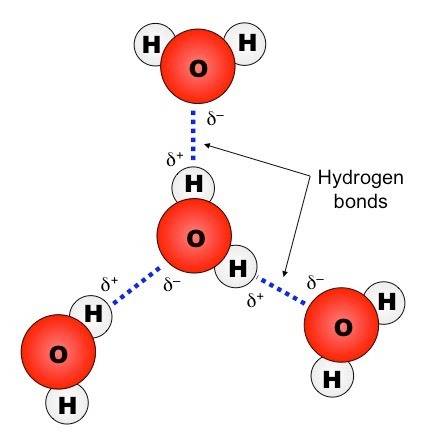
If wave functions were just calculational tools. Molecules like the following still interact by wave functions, right?
So how can it be calculational tool? And if it is, then what model do you use to describe the interaction of molecules without any concept of wavefunctions?
246518
 
Physics news on Phys.org
lucas_ said:
We always think in terms of isolated particles.

Who is "we"? What is your justification for this statement? Many physicists spend lots of time looking at quantum models of things other than isolated particles.

lucas_ said:
It's better to analyze it with solids.

To analyze what?

lucas_ said:
Molecules like the following still interact by wave functions, right?

No; "interact by wave functions" makes no sense. Wave functions describe states of quantum systems (or ensembles of such systems, or knowledge about such systems, depending on which interpretation of QM you adopt). Interactions are described by (parts of) Hamiltonians.
 
PeterDonis said:
Who is "we"? What is your justification for this statement? Many physicists spend lots of time looking at quantum models of things other than isolated particles.

We, meaning the many participants in this forums who spent decades debating the meaning of wave functions.

To analyze what?

No; "interact by wave functions" makes no sense. Wave functions describe states of quantum systems (or ensembles of such systems, or knowledge about such systems, depending on which interpretation of QM you adopt). Interactions are described by (parts of) Hamiltonians.

I see. So Hamiltonians can't be treated as just statistical tools? So the H20 molecule interact by hamiltonians and can exist without any wave functions? But in molecular analysis. I always see wave functions described.
 
lucas_ said:
We, meaning the many participants in this forums who spent decades debating the meaning of wave functions.

I'm sorry, but I'm going to need more than your unsupported word for this. Can you give links to specific threads?

lucas_ said:
So Hamiltonians can't be treated as just statistical tools? So the H20 molecule interact by hamiltonians and can exist without any wave functions?

You seem to be confusing the mathematical models with the things being modeled. Hamiltonians (and wave functions, for that matter) are parts of mathematical models. Real quantum systems aren't Hamiltonians or wave functions. They're real atoms or molecules or solids or whatever.
 
PeterDonis said:
I'm sorry, but I'm going to need more than your unsupported word for this. Can you give links to specific threads?

Recent Threads like "Qbism vs Copenhagen". "Realism from locality". These mostly involved few particles that can't be seen. So let's deal with stuff like water that can be clearly seen.

You seem to be confusing the mathematical models with the things being modeled. Hamiltonians (and wave functions, for that matter) are parts of mathematical models. Real quantum systems aren't Hamiltonians or wave functions. They're real atoms or molecules or solids or whatever.

So in interpretation where wave functions were just calculational tools. The atoms or molecules have beables or exist independent of observation? For isolated particles like electron in double slits. We don't know how the electron "move" between emitter and detector. If they were just calculation tools, some treat the electron as not-existing before measurement. Bohr declared that in the absence of measurement to determine the properties of particles, the properties don't exist.

This is why it's better to analyze solids where you can't assume they don't exist between measurements. If properties of H20 don't exist between measurements, then the water can just disappear.

So Copenhagen doesn't apply in the case of water molecules, but only double slit particles or few things you can't see? If not. How do you apply Copenhagen in the case of water molecules? Bohr sounded like the particles don't have to exist before measurements (he emphasized we only have access to observations). So how can water molecule don't exist before measurements?

You may say not to confuse math models with objects. But in the double slit experiments. Copenhagen says to just focus on measurement. They can't literally model how the electron appear between measurements (hence the formalism about denying reality vs denying locality, etc.).
 
  • Sad
Likes   Reactions: weirdoguy
lucas_ said:
Recent Threads like "Qbism vs Copenhagen". "Realism from locality". These mostly involved few particles that can't be seen

So do lots of experiments: all of particle physics, much of chemistry, a good part of biology.

lucas_ said:
let's deal with stuff like water that can be clearly seen.

This is certainly part of science, but it's extremely unrealistic to expect science to limit itself to this. If you don't like discussions here at PF on things that can't be seen, you're welcome to not participate in them. You're also welcome to start threads to discuss specific experiments on stuff that can be seen, with appropriate references.
 
lucas_ said:
So in interpretation where wave functions were just calculational tools. The atoms or molecules have beables or exist independent of observation? For isolated particles like electron in double slits. We don't know how the electron "move" between emitter and detector. If they were just calculation tools, some treat the electron as not-existing before measurement. Bohr declared that in the absence of measurement to determine the properties of particles, the properties don't exist.

This is why it's better to analyze solids where you can't assume they don't exist between measurements. If properties of H20 don't exist between measurements, then the water can just disappear.

So Copenhagen doesn't apply in the case of water molecules, but only double slit particles or few things you can't see? If not. How do you apply Copenhagen in the case of water molecules? Bohr sounded like the particles don't have to exist before measurements (he emphasized we only have access to observations). So how can water molecule don't exist before measurements?

You may say not to confuse math models with objects. But in the double slit experiments. Copenhagen says to just focus on measurement. They can't literally model how the electron appear between measurements (hence the formalism about denying reality vs denying locality, etc.).

What all this boils down to is, you don't like not knowing what happens to quantum objects like electrons between measurements. Welcome to QM. But you also propose basically ignoring all such objects and only doing physics on stuff that can be seen. That, as I said in my previous post, is extremely unrealistic.

Since you are not asking any question but simply asserting your idiosyncratic and unrealistic opinion, this thread is closed.
 
  • Like
Likes   Reactions: weirdoguy

Similar threads

  • · Replies 1 ·
Replies
1
Views
2K
  • · Replies 13 ·
Replies
13
Views
2K
  • · Replies 7 ·
Replies
7
Views
3K
  • · Replies 5 ·
Replies
5
Views
3K
  • · Replies 11 ·
Replies
11
Views
3K
  • · Replies 36 ·
2
Replies
36
Views
9K
  • · Replies 8 ·
Replies
8
Views
2K
  • · Replies 2 ·
Replies
2
Views
1K
  • · Replies 8 ·
Replies
8
Views
3K
  • · Replies 32 ·
2
Replies
32
Views
4K