Can we use the tangental point to find gradients?

  • Context: High School 
  • Thread starter Thread starter lioric
  • Start date Start date
  • Tags Tags
    Gradient
Click For Summary

Discussion Overview

The discussion revolves around the methodology for finding gradients using coordinates, specifically the appropriateness of using the point of tangency versus points further away. Participants explore the implications of different approaches in the context of teaching and practical application.

Discussion Character

  • Debate/contested
  • Conceptual clarification
  • Technical explanation

Main Points Raised

  • Some participants express confusion over the difference between using the point of tangency and points further away, noting that both methods yield the same answer.
  • Others argue that using the point of tangency increases the margin for error and that it is better practice to take points further away from the tangent.
  • A participant suggests that the practice of excluding the point of tangency is taught to minimize uncertainty in the gradient calculation.
  • Some participants question the rationale behind the teaching methods, suggesting that they may prioritize exam performance over practical understanding.
  • There is a suggestion that in a freehand graph, it may be acceptable to use one point from the point of tangency and another from further away.
  • One participant emphasizes the importance of constructing a larger triangle for gradient calculations to reduce uncertainty.

Areas of Agreement / Disagreement

Participants do not reach a consensus on the best method for finding gradients. There are competing views regarding the use of the point of tangency and the implications for accuracy and teaching practices.

Contextual Notes

Participants note that the choice of coordinates can affect the uncertainty in gradient calculations, but they do not resolve the underlying assumptions or the reasons for differing teaching methods.
lioric
Messages
335
Reaction score
26
TL;DR
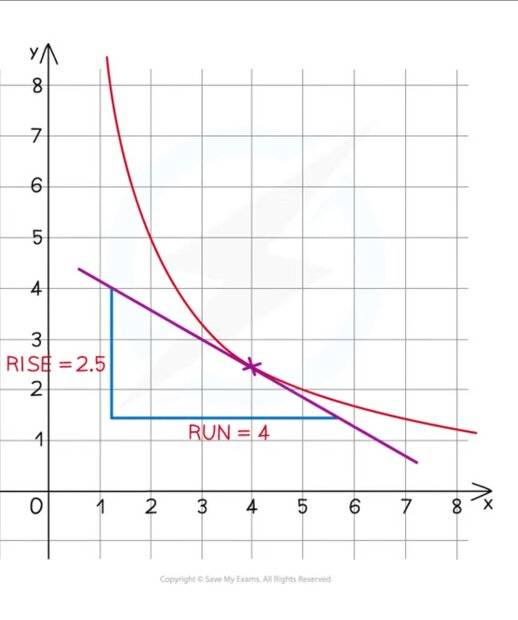
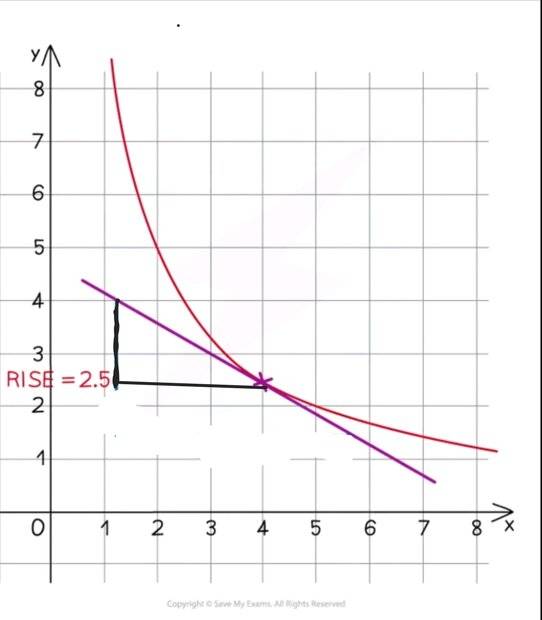
A student of mine came and said that their teacher said that they were to use the coordinates of the point of tendency as one of the coordinates to find gradient.
We were taught to take coordinates like this
1000017479.jpg

But teacher is telling the student to take coordinates like this. What are the major reasons why this is not taught like this. I know the value would be the same, but I also know there is a reason why we don't use this method.
1000017481.jpg
 
Physics news on Phys.org
What's the difference?
 
PeroK said:
What's the difference?
I don't see one. We get the same answer. But we were taught that it was bad practice to use the point of tangency as one of the gradient coordinates. We were asked to take two points further from the point of tangency. And still all the tutorials and books show that the two points are taken excluding the point of tangency, like shown in the first diagram
 
lioric said:
I don't see one. We get the same answer. But we were taught that it was bad practice to use the point of tangency as one of the gradient coordinates. We were asked to take two points further from the point of tangency. And still all the tutorials and books show that the two points are taken excluding the point of tangency, like shown in the first diagram
It's clearly a bad idea to draw the line only as far as the tangent point as this increases the margin for error. And, it's probably better to use all of the tangent line you've drawn. But, the more significant error, I assume, comes from drawing the line.
 
  • Like
Likes   Reactions: lioric
PeroK said:
It's clearly a bad idea to draw the line only as far as the tangent point as this increases the margin for error. And, it's probably better to use all of the tangent line you've drawn. But, the more significant error, I assume, comes from drawing the line.
I suppose in an ideal exam situation, you can get away with it, but it's going to give a huge margin of error when you actually draw a graph from an experiment with best fit line.
Hence why it's bad practice.
I suppose teachers are just teaching to score in an exam now, not to learn
 
PeroK said:
It's clearly a bad idea to draw the line only as far as the tangent point as this increases the margin for error. And, it's probably better to use all of the tangent line you've drawn. But, the more significant error, I assume, comes from drawing the line.
1000017483.jpg

Here the coordinates are taken far from the tangent, but one is from the point of tangency.
Would this be ok? I still feel we should extend the tangent to the other way and take from both sides. And avoid using the point of tangency
 
I don't know Desmos. Is that a freehand drawing?
 
PeroK said:
I don't know Desmos. Is that a freehand drawing?
It's not a freehand drawing.
I'm just asking, if in a freehand graph, is it ok to take two points like this. One far away, the other, from the point of tangency ?
 
lioric said:
It's not a freehand drawing.
I'm just asking, if in a freehand graph, is it ok to take two points like this. One far away, the other, from the point of tangency ?
I don't see why not.
 
  • #10
PeroK said:
I don't see why not.
Ok. Thank you. Much appreciated
 
  • #11
lioric said:
TL;DR Summary: A student of mine came and said that their teacher said that they were to use the coordinates of the point of tendency as one of the coordinates to find gradient.
To minimise the uncertainty in the gradient, the triangle should be as large as convenient. This will usually mean the tangent’s point of contact is not at vertex of the triangle.

(If the reason for this isn’t clear, consider the uncertainty in the gradient if the triangle is very small.)

In addition, when constructing the triangle it helps (slightly) to place the triangle’s corner (the right-angle) at a convenient coordinate , e.g. on (5, 2) rather than (5.15, 1.95).

Well, that’s what I was taught (and is what I taught my students).
 
  • #12
Steve4Physics said:
To minimise the uncertainty in the gradient, the triangle should be as large as convenient. This will usually mean the tangent’s point of contact is not at vertex of the triangle.

(If the reason for this isn’t clear, consider the uncertainty in the gradient if the triangle is very small.)

In addition, when constructing the triangle it helps (slightly) to place the triangle’s corner (the right-angle) at a convenient coordinate , e.g. on (5, 2) rather than (5.15, 1.95).

Well, that’s what I was taught (and is what I taught my students).
Thank you very much. I do it as well. And I teach it just the same. I was taught like that too. Just wanted to know the reason for it. My hunch was on uncertainty too. Thank you very much
 

Similar threads

  • · Replies 4 ·
Replies
4
Views
2K
  • · Replies 18 ·
Replies
18
Views
3K
  • · Replies 9 ·
Replies
9
Views
3K
  • · Replies 5 ·
Replies
5
Views
2K
  • · Replies 53 ·
2
Replies
53
Views
6K
  • · Replies 5 ·
Replies
5
Views
2K
  • · Replies 4 ·
Replies
4
Views
6K
  • · Replies 5 ·
Replies
5
Views
3K
  • · Replies 11 ·
Replies
11
Views
2K
  • · Replies 5 ·
Replies
5
Views
3K