SUMMARY
The gravitational constant G is an independent constant that cannot be derived from other constants such as the permittivity of free space (ε0) or Coulomb's constant (k). While G can be expressed in terms of ε0 through algebraic manipulation, such as G = x/(4πε0), this does not provide any physical meaning to the variable x. The relationship between G and the distance r in Newton's law of gravitation is geometric, but G itself remains a measured value without a calculable equivalent in the same manner as electric force constants. The discussion highlights the distinction between gravitational and electromagnetic forces, emphasizing that gravity does not have dipoles and behaves uniformly inside and outside matter.
PREREQUISITES
- Understanding of Newton's law of gravitation
- Familiarity with Coulomb's law and electric force constants
- Basic knowledge of linearized General Relativity
- Concept of permittivity and permeability in physics
NEXT STEPS
- Research the derivation and significance of the gravitational constant G
- Explore the relationship between gravitational and electromagnetic forces
- Study linearized General Relativity and its implications for gravitational waves
- Investigate the concept of gravitational permittivity and its applications
USEFUL FOR
Physicists, students of gravitational theory, and anyone interested in the fundamental constants of nature and their interrelations.
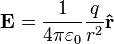 Any help would be appreciated. Thanks.