Deriving Gravitational Constant G: Pi, r, \epsilon & k Explained

Click For Summary

Discussion Overview

The discussion revolves around the derivation and interpretation of the gravitational constant G, exploring its relationship with other constants such as the permittivity of free space (ε) and the Coulomb force constant (k). Participants examine the geometric implications of the equations involved and the conceptual underpinnings of gravitational and electrostatic forces.

Discussion Character

  • Exploratory
  • Debate/contested
  • Technical explanation

Main Points Raised

  • One participant seeks to express G in terms of π, r, ε, and k, suggesting a geometric interpretation of the r² term in the gravitational force equation.
  • Another participant asserts that G is an independent constant and cannot be derived from other constants, emphasizing that it must be measured rather than calculated.
  • A different viewpoint suggests that while G can be expressed algebraically in relation to ε, the resulting constant lacks physical meaning.
  • Some participants note the similarity between the gravitational and Coulomb forces due to their spherical symmetry, hinting at potential deeper significance in physics.
  • One participant introduces the concept of gravitational permittivity and permeability in the context of linearized General Relativity, suggesting analogies to electromagnetic constants.
  • Another participant questions the relationship between G and r in Newton's law, seeking clarification on the implications of the constants involved.

Areas of Agreement / Disagreement

Participants express differing views on the relationship between G and other constants, with some asserting that G is independent while others propose potential connections. The discussion remains unresolved, with no consensus on how G can be derived or related to other constants.

Contextual Notes

Participants highlight the historical and conceptual differences between gravitational and electromagnetic forces, noting that gravity does not involve dipoles and behaves consistently inside and outside of matter. The discussion also touches on the limitations of current understanding regarding the physical meaning of constants related to G.

gth759k
Messages
4
Reaction score
0
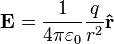
I'm just trying to find how to derive the gravitational constant G. In other words what is G in terms of pi, r, \epsilon, etc. And how does it relate to k, the permittivity of free space. Like in:
f679cf3e13506e73340d176eb06c80b2.png
Any help would be appreciated. Thanks.
 
Physics news on Phys.org
It doesn't. G is an independent, separate constant.
 
Vanadium 50 said:
It doesn't. G is an independent, separate constant.

ok, but in the equation F=G*(m1*m2)/(r^2) I know the r^2 isn't just there for no reason. Its a coulombic force so the r^2 comes from 4*pi*(r^2). There is a geometric meaning. You could easily write G as x/(4*pi*epsilon0) which is the same as x*k (where k= 1/4*pi*e0) or x*(Boltzmann constant) in this case G is related to e0 (permittivity of free space) like this: e0 = x/(4*pi*G). This is just algebraic manipulation, but the geometric meaning is what I'm after. The units of G are N*(m/kg)^2 so as long as the units match in the end you could find other fundamental constants that G is factor of.
 
What? You're not making much sense. Sure, the \frac{1}{r^2} factor in Newton's law has a geometrical interpretation, but G is just a proportionality constant. It has to be measured, there's no way to calculate it from anything else.

And sure, you could write G = x/4πε0 for some value of x, but then x would just be some random value that doesn't have any particular physical meaning.
 
Why wouldn't x have any physical meaning?
 
The \frac 1 {r^2} in both the gravitational constant and Coulomb's law are related by only by the fact that both systems have spherical symmetry. The fact that both the gravitational force and the Coulomb force are spherically symmetric may have a deeper significance but to the best of my knowledge mainstream physics does not recognize it.

The similarity in the two forms is one of the factors that drives the search for a GUT.
 
g=\frac{GM}{r^2}

Just measure all values and solve for G.
 
gth759k, I may see the source of the confusion here. Correct me if I'm wrong, but you're wondering why we can express the Coulomb force constant as,

k_e = \dfrac{1}{4\pi\epsilon_0}

Whereas G has no equivalent expression. The reason is part history and part convenience. In electrodynamics, we deal with the phenomena of polarization and magnetization, which change the electric and magnetic fields inside materials. Mathematically this can be analyzed by considering adjusted quantities called the electric permittivity \epsilon and magnetic permeability \mu So we can express the electric and magnetic force constants in terms of the vacuum values of these quantities. In the case of gravity, there's only an attractive force, meaning that we don't have gravitational dipoles. And so we don't need to modify the force constant inside a medium. Gravity inside matter behaves just like gravity outside of matter. Technically you could make up some variable and define it in terms of G, but that variable would be physically meaningless.

Now as to the part about how G relates to r in Newton's Gravity Law, I'm not sure what you're referring to. Maybe you could be more specific.
 
gth759k said:
In other words what is G in terms of pi, r, \epsilon, etc. And how does it relate to k, the permittivity of free space. .

Hi gth759k;
I think you are interested in the vacuum values...

In linearized General Relativity, where the non-linear terms are ignored (in the to weak field / low velocity limit) the gravitational permittivity of free space, epsilon(g), is sometimes used:
... e(g) = 1/(4pi)(G)

and also the "gravitoMagnetic" permeability, upsilon(g),:...
.....u(g) = 4(pi)(G)/c^2

...which is analogous to (not the same as) the electromagnetic permittivity and permeability in vacuum.

So that the speed of gravitational waves becomes the analog ...
... c = 1/ sq.rt.[e(g) x u(g)]

... Is that what you are getting at?

.
 
Last edited:

Similar threads

  • · Replies 1 ·
Replies
1
Views
1K
  • · Replies 72 ·
3
Replies
72
Views
10K
  • · Replies 1 ·
Replies
1
Views
2K
  • · Replies 3 ·
Replies
3
Views
4K
  • · Replies 8 ·
Replies
8
Views
2K
Replies
2
Views
2K
  • · Replies 12 ·
Replies
12
Views
2K
  • · Replies 27 ·
Replies
27
Views
2K
  • · Replies 1 ·
Replies
1
Views
3K
  • · Replies 1 ·
Replies
1
Views
4K