Dethrone
- 716
- 0
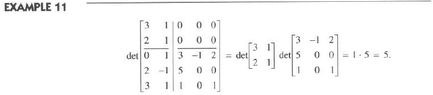
The discussion revolves around the properties of block matrices, specifically focusing on how the presence of non-zero blocks affects the determinant. Participants explore the structure of block matrices, the implications of having zero blocks, and the sizes of the blocks involved.
Participants generally agree on the structure of block matrices and the implications of having zero blocks, but there is no explicit consensus on all aspects of the determinant properties discussed.
The discussion does not clarify the specific conditions under which the determinant properties hold, nor does it address potential limitations or assumptions regarding the sizes and arrangements of the blocks.